
There is an old military truth that Washington would do well to remember: the battlefield does not care how convincing your excuses are.
You can blame the weather, the terrain, faulty intelligence, inadequate resources, or the incompetence of your subordinates. You can surround yourself with people who assure you the battle plan was brilliant and the enemy simply got lucky.
But the casualties remain. The territory is lost. And no amount of explaining changes the outcome.
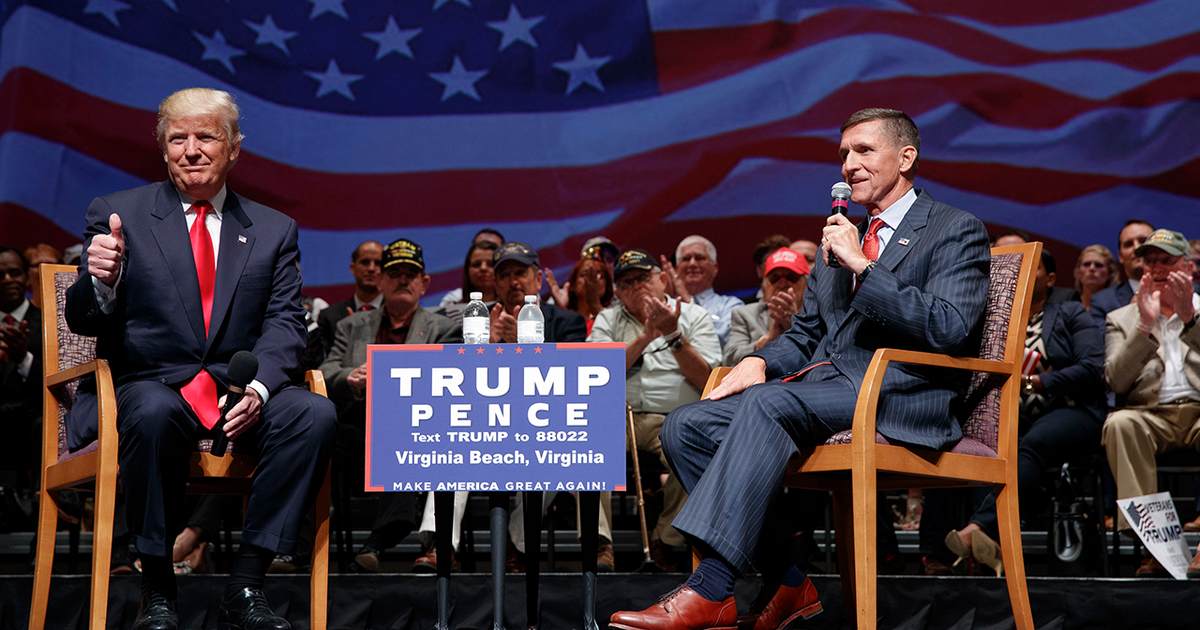
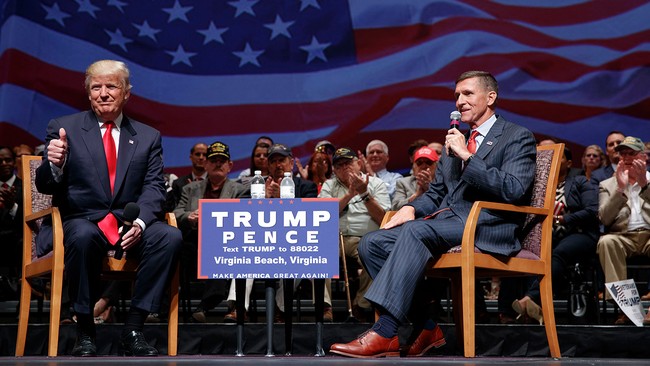
Following the November 3 elections, retired Lieutenant General Michael Flynn, President Trump’s former national security adviser, published an open letter urging the president to confront the political aftermath with something Washington has never been particularly good at: an honest assessment of its own failures.
Flynn invoked a military practice known as the After Action Review, or AAR. It’s a disciplined examination of what was supposed to happen, what actually happened, why the two differed, and what must change before the next mission.
It is not designed to preserve anyone’s feelings. It is designed to prevent the same mistakes from happening twice.
Imagine applying that standard to Washington.
Imagine the president, his cabinet, congressional leadership, and political advisers sitting around a table without cameras, publicists, or carefully rehearsed talking points. No one gets to blame the media. No one gets to hide behind party affiliation. No one gets to confuse good intentions with measurable results.
Instead, everyone must answer four uncomfortable questions.
What did we promise? What did we deliver? What did we fail to deliver? And why?
Flynn’s first recommendation was straightforward: acknowledge the failure and own it.
There is a difference between explaining a defeat and explaining it away. The first requires evidence and introspection. The second requires only a convenient scapegoat.
Certainly, individual candidates, local issues, and campaign strategies matter. But when voters deliver a broad political rebuke, leadership must examine more than the shortcomings of everyone else.
And that examination must begin with the promises that brought Trump back to the White House.
Americans did not vote in 2024 merely to change the name on the Oval Office door.
They voted with expectations. Lower prices. Border security. Government accountability. Less Washington corruption. An end to unnecessary foreign entanglements. A government that remembered the people financing it.
Some promises have been addressed. Others remain unfinished, disputed, or overtaken by events. The administration owes Americans a clear accounting of which is which.
Consider foreign policy. Trump campaigned on ending wars and avoiding unnecessary conflicts. Yet Americans are now confronting the consequences of another prolonged military engagement involving Iran. Supporters may argue that intervention was necessary. Critics question its objectives and costs.
Those questions deserve answers, not slogans.
The same applies to affordability. Americans were promised economic relief, but families still measure prosperity at the grocery store, the gas pump, and the kitchen table. A favorable economic statistic means considerably less to someone who cannot afford the mortgage.
A political promise is not fulfilled simply because a press release says it is.
Perhaps the most revealing portion of Flynn’s letter concerns the president’s inner circle. Flynn cautions that the very people Trump relies upon may themselves be part of the problem.
Power has a peculiar way of changing the conversations people are willing to have with you.
The higher someone rises, the more carefully others choose their words. Disagreement becomes disloyalty. Criticism becomes betrayal. Uncomfortable truths are softened until they are barely recognizable.
Psychologist Irving Janis explored this phenomenon in his work on groupthink, examining how the desire for consensus can undermine sound decision-making.
A president needs advisers willing to tell him when a policy is failing, a strategy is unsustainable, or the public has stopped listening.
Not because they oppose him, but because they take their responsibilities seriously.
Abraham Lincoln repeatedly replaced military commanders during the Civil War. John F. Kennedy’s administration examined its disastrous Bay of Pigs operation and reconsidered how national security decisions were made.
Neither president was immune to mistakes. Neither could afford the luxury of pretending mistakes had not occurred.
And neither can Donald Trump.
There is another troubling feature of modern American politics: the expectation that voters must remain endlessly loyal to the politicians they previously supported.
A Republican criticizing a Republican president is accused of helping Democrats. A Democrat challenging a Democratic administration risks similar condemnation.
Somewhere in this peculiar arrangement, we’ve forgotten who works for whom.
The American people are not employees of the Republican or Democratic National Committees. They are citizens, entitled to question their government, demand results, and withdraw their support when elected officials fail to meet their expectations.
The Constitution does not require Americans to defend the president. It requires the president to uphold his constitutional obligations.
That distinction should never become controversial.
Flynn’s final recommendation is to establish clear objectives. And here is where his military analogy becomes particularly useful.
An After Action Review that produces no changes is little more than an expensive conversation.
Accountability requires measurable priorities, responsible leadership, realistic timelines, and the willingness to tell Americans when circumstances have changed.
It also requires humility, something our political culture increasingly mistakes for weakness.
Flynn closes his letter by returning to the people government is supposed to serve: American families, homes, communities, and the country itself.
And perhaps that is where the entire discussion should begin.
Because long after the election analysts have finished their explanations, the politicians have assigned blame, and the television cameras have moved on, ordinary Americans are still here.
Still working. Still paying. Still raising children. Still trying to build decent lives in a country they love.
They cannot afford to treat government as a perpetual campaign or national leadership as an exercise in personal vindication.
The purpose of public office is not to protect the feelings, reputation, or political fortunes of the person occupying it.
It is to serve the public.
General Flynn has offered President Trump an opportunity to examine the distance between those two things.
Whether the president accepts that challenge is his decision.
But the obligation to answer for the consequences of governing does not disappear when an election ends.
The presidency was never meant to be a monument to the man who occupies it.
It is a responsibility to the people who must live with what he does.
Editor’s Note: Do you enjoy PJ Media’s conservative reporting exposing the radical left and woke media? Support our work so we can keep bringing you the truth.
Join PJ Media VIP and use promo code FIGHT to receive 60% off your membership.