
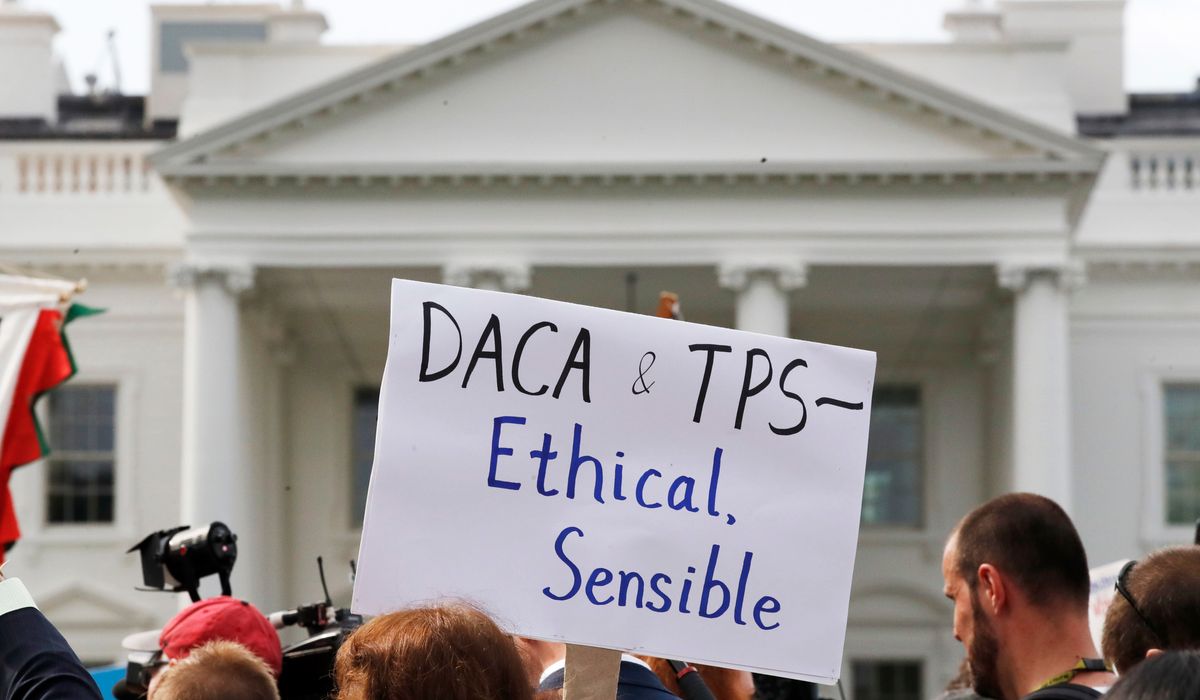
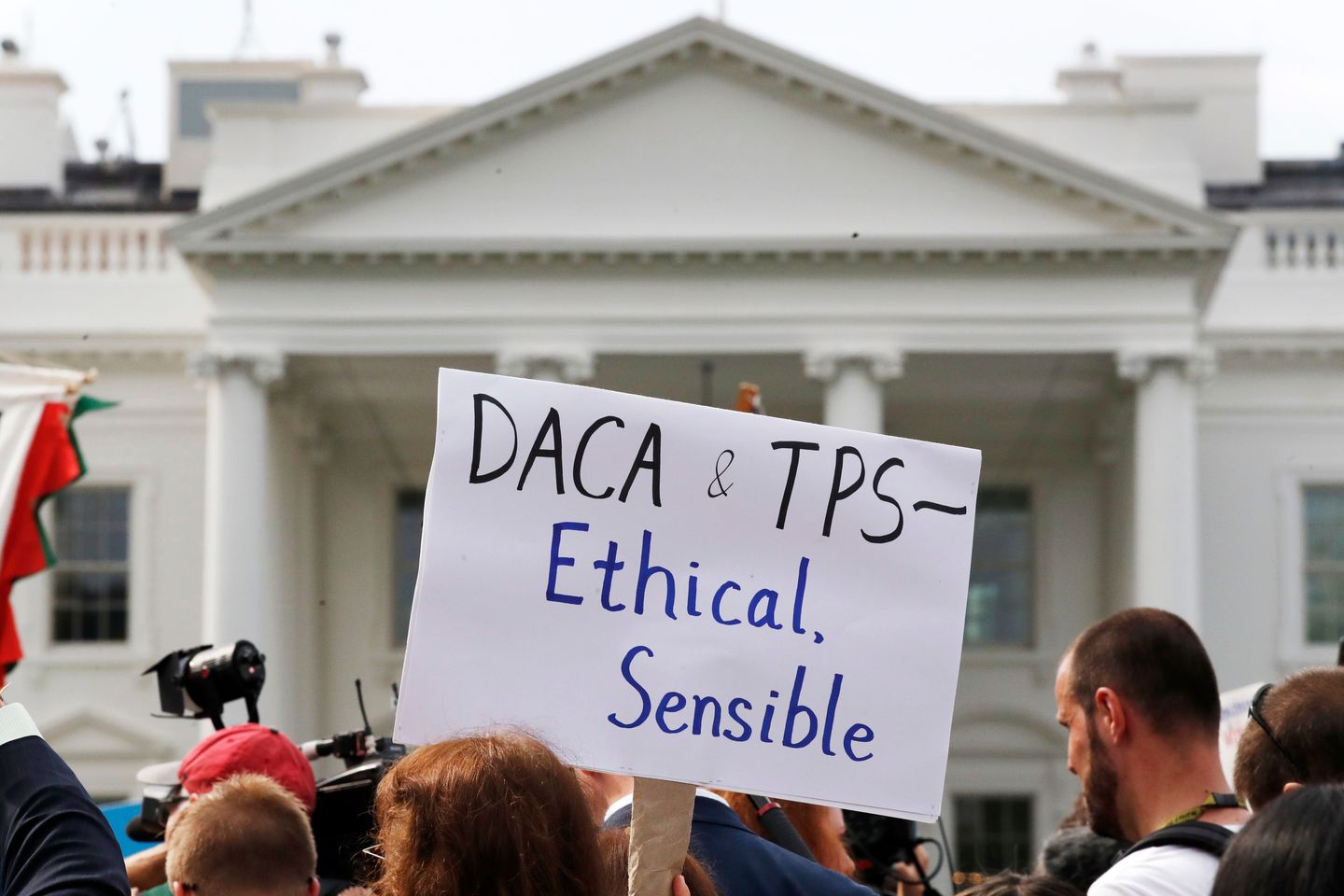
The Supreme Court sought to draw lines Wednesday for how much power the executive branch has to end Temporary Protected Status — a deportation amnesty — for citizens of Syria, Haiti and other troubled countries.
At stake is the legal status of roughly 1 million migrants who are here under TPS, and whom President Trump has sought to boot from those protections.
He’s been largely blocked by lower courts. Solicitor General D. John Sauer begged the justices to step in and tamp down on that wall of judicial opposition, saying it’s trampling on the president’s core foreign policy powers.
“It’s almost like these district courts are appointing themselves junior varsity secretaries of state,” he said.
The law does seem to give the Homeland Security secretary broad authority to decide which countries are covered by TPS. The question is whether it gives DHS that same power to reel it in.
Complicating matters are Mr. Trump’s comments, which his opponents said expose an unconstitutional intent to discriminate against non-White migrants.
“Now we have a president saying at one point that Haiti is a ‘filthy, dirty and disgusting s———- country’ — I’m quoting him — and where he complained that the United States takes people from such countries instead of people from Norway, Sweden and Denmark,” said Justice Sonia Sotomayor, an Obama pick.
She also pointed to the president’s statement that migrants from TPS countries were “poisoning the blood of America.”
Mr. Sauer countered that those were comments about crime and instability, not evidence of racial discrimination.
“Not a single one of them mentions race,” he said.
TPS was created by Congress as a humanitarian protection in cases where countries face war, natural disaster or other instability. It is designed to give those nations a chance to recover without facing an influx of expats returning home — and to give the migrants themselves a chance to wait out the worst of the conditions back home.
In practice, it’s become a new immigration system, with some migrants from Central America having lived in the U.S. under TPS for more than 25 years at this point.
The law says TPS decisions are not reviewable by the courts.
Lower courts, in stopping the president, have ruled that they are not allowed to second-guess the substance of his conclusions, but they say they can still review whether he checked all the boxes along the way, such as consulting with the State Department and pondering conditions on the ground.
Ahilan Arulanantham, arguing Wednesday on behalf of TPS holders from Syria, said courts must have that power.
“The secretary can terminate TPS but he must turn square corners, follow the rules Congress set,” Mr. Arulanantham said.
He also warned that if the administration’s power is unchecked, it would mean a future president could designate every country for TPS, creating “mass immigration relief.”
The high court was hearing two cases, one involving roughly 350,000 Haitians and one covering about 6,000 Syrians.
Syria was first designated in 2012 and has been renewed repeatedly since then. And Haiti was first designated after a devastating earthquake in 2010, covering about 50,000 people. The Biden administration then expanded the designation, covering hundreds of thousands of people who arrived during the migrant surge.
Including other countries, the Biden administration added more than 1 million people to the ranks of TPS.
The Trump administration has tried to wind that down, issuing 13 determinations in a row ending protections.
The president’s opponents saw racism, saying all of the countries where the president has reeled in TPS are “non-White.”
But Justice Samuel A. Alito Jr. dented that argument when he asked about Syria, and one of the lawyers admitted the State Department may classify Syrians as White.