
Republican lawmakers on the House Armed Services Committee on Friday raked Army leaders over the Pentagon’s cancellation of a planned troop deployment to Poland, with the panel’s chairman declaring lawmakers are “not happy” and demanding an explanation that Army officials struggled to provide.
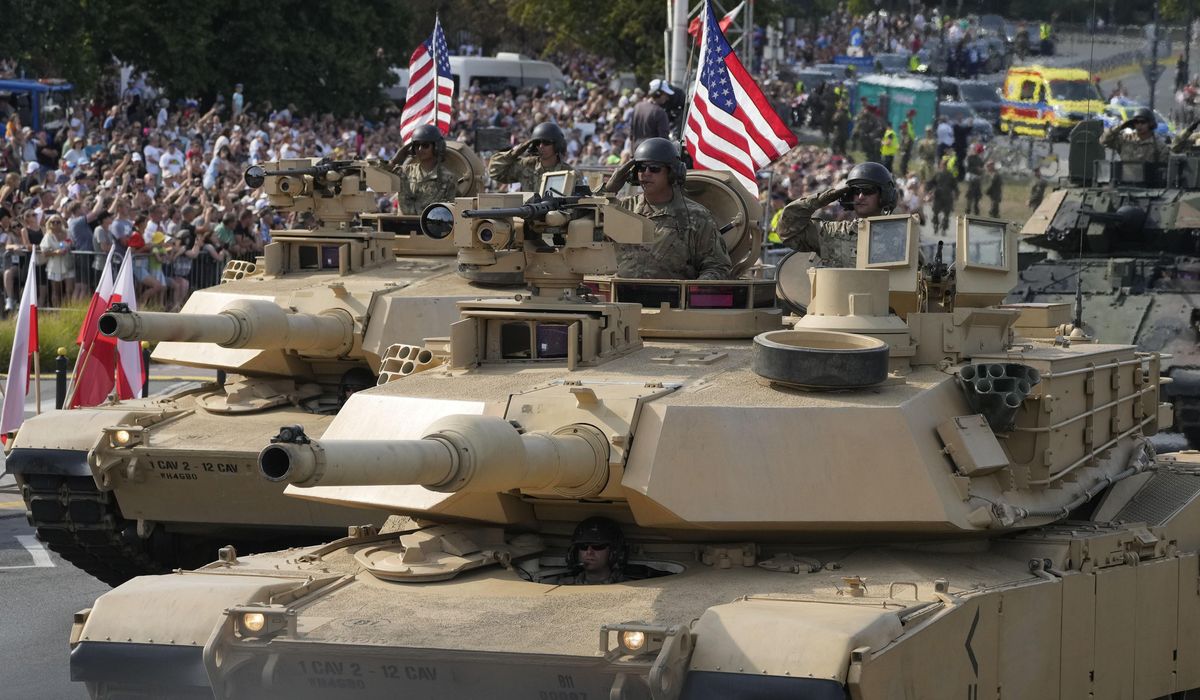
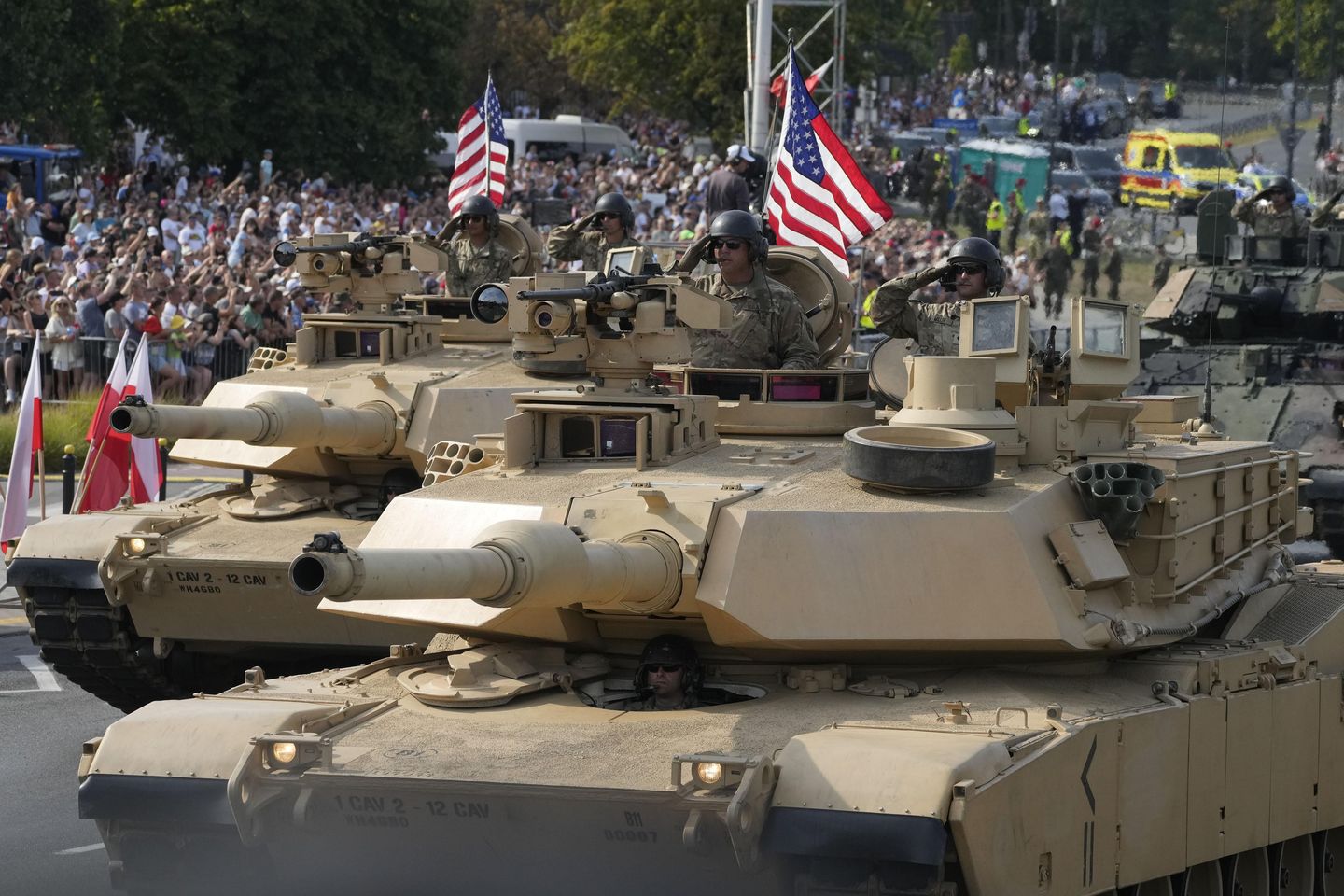
Defense Secretary Pete Hegseth ordered the cancellation of the 2nd Armored Brigade Combat Team’s nine-month rotation to Poland — a unit from the 1st Cavalry Division based in Texas — in a move that blindsided both congressional allies and the European nation the Trump administration has publicly called a “model ally.”
“We don’t know what’s going on here, but I just tell you we’re not happy with what’s being talked about, particularly since there’s been no statutory consultation with us,” committee Chairman Mike Rogers, Alabama Republican, told Army Secretary Dan Driscoll and acting Army Chief of Staff Gen. Christopher LaNeve during a budget hearing Friday.
Neither man could explain why the order was issued. Under questioning from Rep. Austin Scott, Georgia Republican, Mr. Driscoll said the cancellation came “just a couple days ago,” while Gen. LaNeve said the decision was made in the “last two weeks.” Gen. LaNeve said the order originated with the head of U.S. European Command, who worked with Army leadership “in close consultation” on which unit would bear the reduction. It “made the most sense for that brigade to not do its deployment in theater,” Gen. LaNeve said.
The confusion was compounded by the fact that some elements of the unit had already arrived in Europe, with equipment in transit at the time the cancellation was issued.
Rep. Don Bacon, Nebraska Republican, said Polish officials called him personally after learning of the cancellation — and that Warsaw had been given no advance notice. “They called me yesterday, they did not know, they were blindsided,” Mr. Bacon told Mr. Driscoll and Gen. LaNeve. “These are some of our best allies, and they had no idea. They still don’t know what the plan is.”
Mr. Bacon, who acknowledged the decision did not originate with Army leaders, called it “reprehensible” and “an embarrassment to our country.” He added: “We’re sending a terrible message to Russia and to our allies.”
The cancellation was first reported by Army Times and follows a series of force-posture changes in Europe that critics have called abrupt. Earlier this month, Mr. Hegseth announced a withdrawal of 5,000 troops from Germany, a decision that followed tensions with Berlin after German Chancellor Friedrich Merz said Iran was “humiliating” the United States over the Strait of Hormuz — remarks President Trump publicly disputed. The Pentagon framed the Germany withdrawal as the result of a broader posture review. The Poland cancellation and the Germany drawdown together represent what three defense officials described to Politico as a net reduction of roughly 5,000 troops across Europe, though internal planning remained in flux.
The acting Pentagon press secretary, Joel Valdez, pushed back on characterizations of the decision as sudden. “The decision to withdraw troops follows a comprehensive, multilayered process that incorporates perspectives from key leaders in [U.S. European Command] and across the chain of command,” Mr. Valdez said in a statement. “This was not an unexpected, last-minute decision.”
But that account conflicted with descriptions from multiple officials and the Army leaders’ own testimony. “We had no idea this was coming,” one U.S. official told Politico, adding that European and American officials had spent 24 hours on the phone trying to understand the decision.
Retired Lt. Gen. Ben Hodges, the former commander of U.S. Army Europe, said the cancellation undermined a fundamental American commitment. The Army’s role in Europe “is all about deterring the Russians, protecting America’s strategic interests and assuring allies,” Gen. Hodges told Politico. “And now a very important asset that was coming to be part of that deterrence is gone.”
Poland spends 4.7% of its GDP on defense — the highest proportion among NATO allies — and Mr. Trump has repeatedly cited that spending as a mark of a responsible partner. Polish officials offered muted and conflicting public responses, with Deputy Prime Minister Władysław Kosiniak-Kamysz posting on social media that the matter “does not concern Poland” and is linked to a broader U.S. posture review in Europe.
A senior NATO official acknowledged the American adjustment but sought to tamp down alarm, saying rotational forces such as the canceled Poland deployment do not factor into the alliance’s long-term deterrence plans. The official noted that France and Germany have 5,000 combined troops on NATO’s eastern flank, a figure expected to grow by thousands by the end of next year, and that Canada has also increased its eastern flank presence.
Democrats joined Republicans in criticizing the decision. Rep. Adam Smith of Washington, the committee’s ranking member, demanded a strategic rationale.
“We had a brigade combat team ready to go to Poland, decided not to, and the only answer I’ve got is, well, that’s what they told us to do,” Mr. Smith said. “If there’s some strategy behind it, then you guys ought to know, and you ought to be able to communicate it to us.”
Rep. Marilyn Strickland, Washington Democrat, said the withdrawal carried its own message.
“When we take that many troops away,” Ms. Strickland said, “it says that we are not a reliable ally.”
This article was constructed with the assistance of artificial intelligence and published by a member of The Washington Times’ AI News Desk team. The contents of this report are based solely on The Washington Times’ original reporting, wire services, and/or other sources cited within the report. For more information, please read our AI policy or contact Steve Fink, Director of Artificial Intelligence, at sfink@washingtontimes.com
The Washington Times AI Ethics Newsroom Committee can be reached at aispotlight@washingtontimes.com.