
A major American manufacturing announcement is drawing applause in Georgia — and considerable outrage across the Atlantic.
German luxury automaker Audi announced plans to build a multibillion-dollar manufacturing plant in Georgia alongside President Donald Trump on Saturday, but the company’s CEO is now facing fierce backlash in Germany over his participation in the event, Reuters reported Monday.
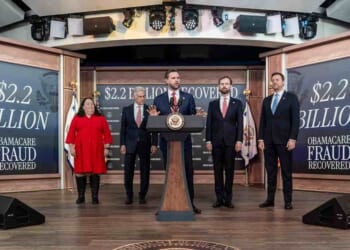
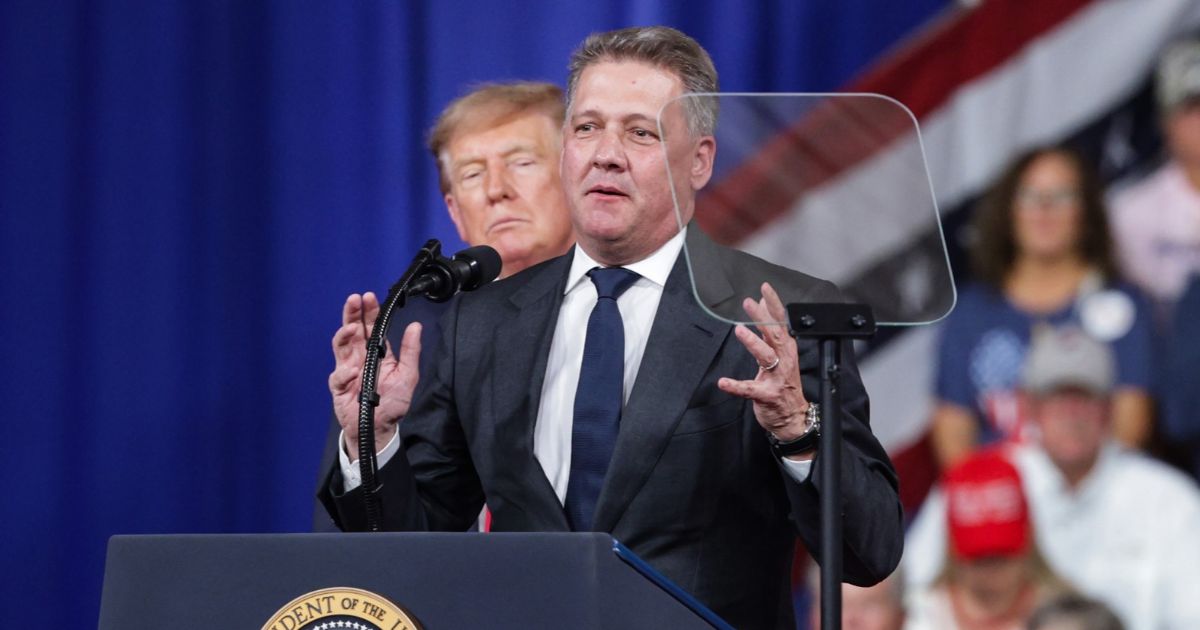
Audi CEO Gernot Döllner joined Trump onstage at a campaign rally in Perry, Georgia, to announce plans for the company’s first American manufacturing facility, which would be located in nearby Macon.
The planned investment, valued at approximately $4.2 billion, would create an estimated 4,500 American jobs and eventually produce 200,000 vehicles annually, the Associated Press reported.
“Think of that. 200,000 cars a year. That’s incredible,” Trump said, crediting his administration’s tariff policies for encouraging the German automaker to invest in American manufacturing.
Döllner, meanwhile, emphasized the company’s commitment to American consumers.
“This is a long-term investment, because we believe in the American market,” the Audi executive said, adding that the facility would manufacture the company’s largest and most luxurious SUVs.
While the announcement was welcome news for Georgia, it sparked a decidedly different reaction in Germany, where prominent labor leaders criticized Döllner for appearing alongside Trump just days before the Nov. 3 midterm elections.
Christiane Benner, president of Germany’s powerful IG Metall labor union and deputy chair for the supervisory board of Volkswagen, Audi’s parent company, was particularly outspoken.
“The way in which Gernot Doellner has presented himself and Audi in the US is deeply embarrassing, politically unacceptable and unworthy of the company,” Benner said in a statement obtained by Reuters.
Benner also accused the Audi executive of violating company guidelines that prohibit political involvement during the three months preceding an election.
A German labor representative, Daniela Cavallo, said that Döllner “allowed himself to be turned into a puppet in the propaganda show.”
Audi’s code of conduct specifically restricts public appearances alongside political candidates during that period, although Reuters reported that company management had approved an exception before Döllner attended the rally.
The backlash also came amid significant financial challenges for Audi’s parent company, Volkswagen, which is pursuing sweeping restructuring measures involving major job cuts and potential factory closures in Germany.
Member poll
How do you feel about foreign companies like Audi collaborating with U.S. politicians?
26 votes cast
Popular Poll
Trending
That has made the prospect of thousands of new American manufacturing jobs particularly contentious among German labor representatives concerned about their own employment prospects.
Nevertheless, there are financial incentives behind Audi’s American expansion.
Reuters reported that U.S. import tariffs cost the company approximately $1.3 billion last year, making domestic production an increasingly attractive option.
The Georgia project is not yet finalized, however. Volkswagen’s supervisory board, which includes German labor representatives, must still approve the investment before it can proceed.
Construction is scheduled to begin in 2027, with vehicle production expected to start in the early 2030s.
For Trump, the announcement provides a high-profile example of a foreign automaker planning to expand manufacturing in the United States. For Audi’s leadership, the challenge now is securing approval for that American investment while navigating growing opposition back home.
Advertise with The Western Journal and reach millions of highly engaged readers, while supporting our work. Advertise Today.