
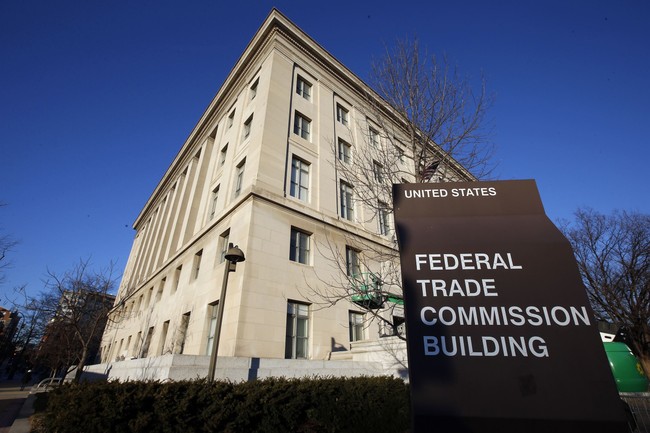
Last summer the FTC asked several of the world’s largest advertising companies for information about their business practices. The suggestion at the time was that the companies might be coordinating boycotts against conservative sites under the guise of stopping “misinformation” and creating “brand safety” by excluding these sites.
Today, the FTC reached a settlement, actually a consent decree, with three of the biggest advertising companies. None of the companies admitted to any wrongdoing but all of them promised not to follow such practices as promoted by “misinformation” watchdogs on the left, i.e. sites like NewsGuard..
Starting in 2018, major U.S. advertising agencies WPP, Publicis and Dentsu—who buy digital ad inventory on behalf of advertisers—unlawfully colluded to impose common “brand safety” standards across the digital advertising industry, according to the FTC’s complaint. The ad agencies, together with their primary competitors Omnicom and IPG, operated through trade associations to establish a common “Brand Safety Floor” to target “misinformation.”
The complaint alleges firms like NewsGuard and the Global Disinformation Index used this misinformation designation as a means to promote the demonetization of disfavored political viewpoints. In a competitive market, ad agencies compete for advertisers’ business by offering brand-safety tools that provide the best quality at the lowest cost. The brand safety agreement displaced competition by insulating the ad agencies from these competitive conditions, according to the complaint.
To resolve the FTC’s charges, the ad agencies have agreed to a proposed order that will stop the alleged coordinated conduct and prevent similar conduct from occurring in the future.
If you’re not familiar with NewsGuard, we’ve written about it several times over the years. Here’s one Ed wrote back in 2024 which serves as a good primer and explains how the group work behind the scenes. The FTC complaint goes into even more detail about how these groups operate.
Over the past decade, a number of organizations pursued strategies that involved classifying disfavored opinions as “misinformation” and then lobbying the digital ad-buying ecosystem to demonetize sites that hosted or shared such content. Some of the most prominent groups included NewsGuard (a self-described ratings agency that ranks the reliability of media outlets), the Global Disinformation Index (“GDI”) (an activist group that seeks to partner with governments and private corporations to attack “disinformation”), Check My Ads (a media watchdog that is “famous for publicly shaming ad-tech firms and advertisers who may have inadvertently funded disinformation and fake news”), and Media Matters for America (an advocacy group which describes itself as a “progressive research and information center dedicated to comprehensively monitoring, analyzing, and correcting conservative misinformation in the U.S. media”).
These groups were relatively small, but they each, in their various ways, sought to elevate concerns within the digital advertising industry about what they viewed as “misinformation,” in order to deprive certain sites of the digital ad revenue they needed to survive. For instance, NewsGuard expressly markets itself as a means to disrupt advertising revenue for “misinformation publishers” by licensing “exclusion lists of untrustworthy sites” to advertisers. GDI was created because its founders believed that the results of the 2016 U.S. presidential election and Brexit referendum were caused by media disinformation, which could be solved by targeting the media companies’ advertisers. Check My Ads explained, in a 2022 article titled “Here’s our plan to defund the insurrectionists,” that it was “launching the first effort to permanently block” prominent conservative media figures such as Charlie Kirk, Glenn Beck, and Steve Bannon “from the ad industry.” And Media Matters engaged in a related campaign to pressure advertisers to remove their advertising from Fox News due to its “extremist programming,” as well as targeting Elon Musk’s X.
It was in this social and political environment that, rather than compete independently, the nation’s largest ad agencies—firms that buy digital ad inventory on behalf of their advertiser clients—agreed that they would all use the same “brand safety” standards to avoid buying ads on websites containing “misinformation.” “Brand safety” refers to advertisers’ desire to avoid buying ads on sites that are categorically inappropriate for any advertising support; for example, brands do not want their ads to appear on pornography websites or sites associated with criminal activity or terrorism. Brand-safety protections are important to advertisers.
The complaint argues that in a free market, this “brand safety” argument wouldn’t have operated as it did. About half the country is conservative so if one agency wanted to ignore those customers, the market would have made it profitable for another agency to take that business. But that didn’t happen because all of the agencies decided to collaborate on a single definition of “brand safety” that was set by the left-leaning groups outlined above. This is a bit dense, admittedly, but it’s worth reading if you want to understand how this worked behind the scenes and why the FTC says it was illegal.
In 2018, the agencies established the Advertising Protection Bureau (“APB”) through their trade association, the American Association of Advertising Agencies (the “4As”). As one ad agency executive summarized the APB’s genesis, “the major [ad agency] holding companies came together under the 4As and agreed that brand safety is so important, that we must combine efforts, become one voice, and stop sending potential mixed signals.”…
Later, the ad agencies also coordinated through the Global Alliance for Responsible Media (“GARM”), an entity created by the World Federation of Advertisers and which they each joined as members. One ad agency executive described GARM as a forum for agencies to “check[] their competitive relationships at the door” while they are “engaged in the brand safety discussion.” In fact, GARM made clear to the six largest global advertising holding companies (the “Big Six”) that discussions between the ad agencies about brand safety were governed by secrecy: “The first rule of Fight Club is: You do not talk about Fight Club. The second rule of Fight Club is: You do not talk about Fight Club.”…
Both the APB and GARM established a common “Brand Safety Floor” to target “misinformation.” The Brand Safety Floor resulted in reduced ad revenues for many conservative publishers; sites that fell below the Brand Safety Floor were at risk of being passed over as ad agencies looked to spend billions of dollars to buy ad inventory on behalf of their advertiser clients. Today, the largest ad agencies control over $81 billion of ad-buying power.
The Sherman Act prohibits “every contract, combination . . . , or conspiracy, in restraint of trade.” In other words, the antitrust laws prevent competitors from agreeing to act collectively in ways that harm competition. Here, as one GARM document explained, the agencies’ agreement on a brand-safety standard related to “misinformation” allowed “the agencies [to] speak as a single entity.” This agreement insulated the ad agencies from the competitive pressures that would otherwise have existed for them to improve and differentiate their brand-safety offerings with the goal of capturing business from each other. It harmed advertisers because they lost the benefits of that competition, including better quality and lower cost brand-safety tools, and the broader reach, better targeting, and cheaper inventory that those tools would have provided in the absence of the agencies’ agreement. And, ultimately, by demonetizing certain conservative media outlets, the agreement hampered debate on some of the most consequential and hotly debated subjects of public life.
They found away to silence conservatives by ruling their sites unsafe to advertise on. And because all the big agencies were in it together, there was no alternative marketplace.
The consent decree still has to be approved by a judge so it’s not final yet. Here’s how FTC Chairman Andrew Ferguson described it.
“As we explain in our complaint, the brand-safety agreement limited competition in the market for ad-buying services and deprived advertisers of the benefits of differentiated brand-safety standards that could be tailored to their unique advertising inventory,” he continued. “This unlawful collusion not only damaged our marketplace, but also distorted the marketplace of ideas by discriminating against speech and ideas that fell below the unlawfully agreed-upon floor. The proposed order remedies the dangers inherent to collusive practices and restores competition to the digital news ecosystem.”
As the complaint alleges, the ad agencies operated through their trade associations—specifically, the World Federation of Advertisers’ Global Alliance for Responsible Media (“GARM”) and the American Association of Advertising Agencies’ Advertiser Protection Bureau (“APB”)—to establish their common brand-safety standards. Under the agencies’ brand-safety agreement, websites that included so-called “misinformation” were deemed to fall below the brand safety floor and thus risked becoming categorically ineligible for advertising revenue.
All of the news coverage of this I’ve seen so far has been intentionally watered down and vague about what exactly was at stake here and what these ad agencies were doing that they have now promised not to do going forward.
A spokesman for WPP said in a statement that the agreement “reflects our existing and ongoing commitment to provide our clients with unbiased advice as they decide where to place their media.” A spokesman for Dentsu said the company was “fully committed to operating transparently, with integrity, and in strict compliance with all applicable laws.” Publicis did not respond to a request for comment.
This potentially a big win for conservative media outlets which have been under pressure for the past several years.
Editor’s Note: Do you enjoy Hot Air’s conservative reporting that takes on the radical left and woke media? Support our work so that we can continue to bring you the truth.
Join Hot Air VIP and use promo code FIGHT to receive 60% off your membership.