
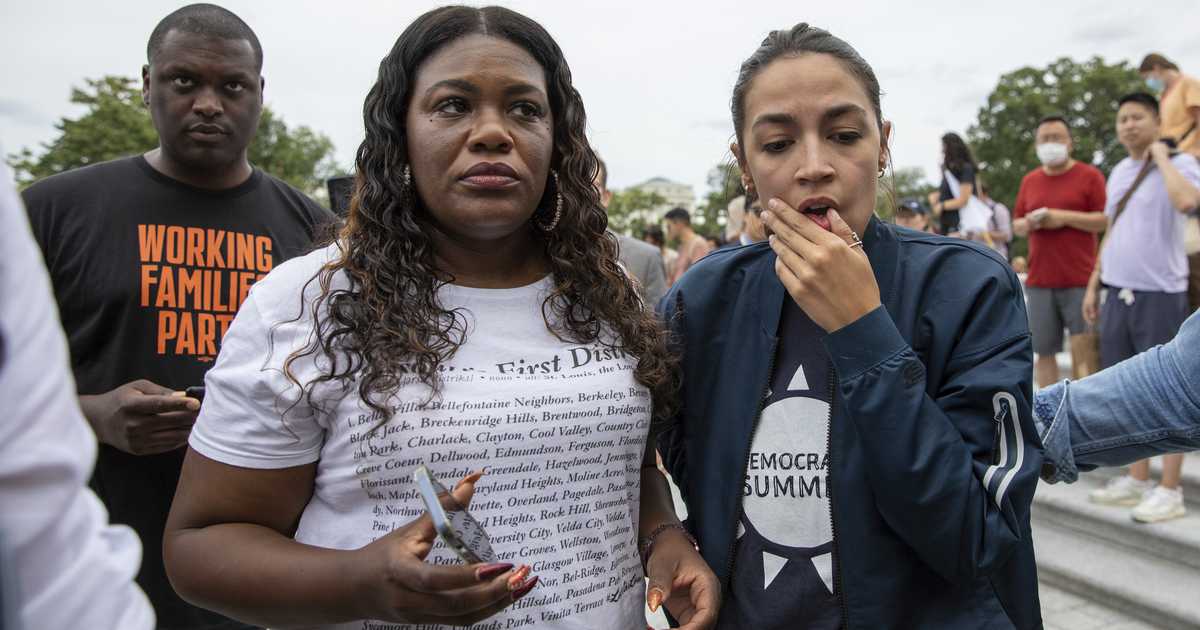
Cori Bush wants current and former members of Congress to visit the West Bank. Before anyone accepts an invitation, Americans should examine the document explaining what the trip’s organizers want to accomplish.
The former Missouri congresswoman and OG member of The Squad registered under the Foreign Agents Registration Act on October 28. Her disclosed work includes political outreach and coordinating educational missions for the International Federation for Rights and Development, a Belgium-based organization, through the Truth and Conciliation Commission.
Calling a trip “fact-finding” suggests an open inquiry. Bush’s agreement describes a campaign built around observation, storytelling, and advocacy for Palestinian farmers and residents. Its stated mission is to amplify their narratives for American and European audiences.
The organizers have already identified the account they want elevated. A prospective traveler ought to understand that purpose before treating an invitation as an opportunity to investigate competing claims independently.
Bush’s assignment includes contacting current and former senators, House members, prominent Democrats, and other political leaders. The target is documented outreach to at least 200 individuals, with visits planned for November through January. The agreement also anticipates continued briefings after the trips and a professional contact database.
Two-hundred contacts don’t mean 200 congressional travelers. They do, however, reveal an organized effort to build relationships beyond an afternoon among olive trees.
The budget lists an $18,000 contractor retainer over three months, plus $7,000 for registration and compliance, for a total of $25,000. The arrangement depends on funding and is largely a nonbinding statement of intent. Approved delegations’ travel expenses would be IFRD’s responsibility, and visits remain subject to applicable ethics rules and approvals.
A former lawmaker brings useful assets to such an undertaking: relationships, familiarity with Congress, and the public standing that comes with having served there. Those advantages help explain why the sponsorship should receive scrutiny. Americans should know whose project benefits when a recognizable political figure offers an invitation.
The registration statement explicitly includes possible preparation and distribution of materials promoting the foreign principal’s interests. The paperwork gives the public a basis for asking how subsequent briefings, appearances, and political outreach relate to that disclosed assignment.
FARA requires disclosure of certain activities undertaken for foreign principals, including foreign organizations and governments. Registration alone doesn’t establish espionage or a criminal offense. The relevant question here is how a sponsored advocacy project might influence American political judgment.
Congressional participants should ask who selects the itinerary, chooses witnesses, translates conversations, and decides which incidents merit attention. They should ask whether they can meet people outside the sponsor’s preferred network and obtain independent documentation of allegations presented during the visit.
A compelling personal account reveals suffering while leaving important questions unanswered. Officials who influence foreign policy have an obligation to investigate beyond the emotional force of an encounter. Their constituents should expect them to test what they hear, especially when a sponsor has already defined the message it hopes to spread.
Bush and IFRD hadn’t responded to requests for comment in the November 5 account of the arrangement. Their descriptions of the project emphasize human rights and educational visits; the disclosed advocacy goals should be included alongside those descriptions whenever the missions are discussed.
From the Washington Free Beacon:
The ex-Squad member, who once warned pro-Israel advocacy groups that she was coming to “tear your kingdom down,” signed on as an independent contractor for the International Federation for Rights and Development (IFRD), a Brussels-based “human rights” nonprofit, according to disclosures she filed under the Foreign Agents Registration Act last week.
According to the contract, IFRD will pay $25,000 to Bush and her friend and campaign manager, Stephany Spaulding, for a project through January to “coordinate fact-finding delegations” to Gaza and the West Bank to elevate “the narratives of Palestinian farmers and residents with settlers in the West Bank and other occupied territories.” The women’s contract provides for $6,000 a month in compensation and another $7,000 for dealing with FARA compliance.
Washington’s appetite for a sponsored trip should come with an equally healthy appetite for questions. Any participant who returns claiming fresh insight should explain the funding, access, itinerary, and effort made to check the sponsor’s account. Publishing those details would let constituents evaluate the presentation before it becomes another polished speech about what America must do next.
Bush has disclosed a role in advancing a foreign organization’s interests. Americans can now assess her invitations with that knowledge. Anyone accepting one should be prepared to explain how the resulting conclusions were reached.
Help PJ Media follow the money and examine the documents behind political messaging. Join PJ Media VIP for 60% off with promo code FIGHT and support independent conservative commentary.