
SEOUL, South Korea – The Trump administration’s shift away from Europe and the Far East to focus more of its diplomatic efforts, policy objectives and military resources on the Western Hemisphere has American allies around the globe scrambling to recalibrate their own relationships with the United States.
The “Donroe Doctrine,” a reassertion of U.S dominion over the Americas, from Venezuela in the south to Greenland in the north, according to critics, sets a dangerous precedent that both China and Russia are likely to seize upon, offering Moscow a tailor-made justification for its designs on Eastern Europe and Beijing a rationale for flexing its muscles in the Indo-Pacific.
“If America continues to pursue a ‘sphere of influence’ approach, there will be diminishing U.S. presence in East Asia,” Seoul-based academic and geostrategist Moon Chung-in told The Washington Times. “We need alternative solutions.”
Mr. Moon, who has advised left-of-center leaders in Seoul on relations with North Korea and joined delegations over the DMZ, is hardly a noted liberal. But he is not alone in his critiques.
But concerns about the Trump administration’s new global strategy are not relegated to the right or the left — in Korea or in the U.S.
Many U.S. conservatives are sounding the alarm over President Trump’s apparent disinterest in NATO and his favorable treatment of Russia.
SEE ALSO: U.S.-Japan to boost defense cooperation with new missiles, more intense exercises
“For Trump, what matters is his personal interest and U.S. national interests: He is interactive, transactional and situational,” Mr. Moon said. “He does not seem to have pre-positioned stances on Japan or South Korea … he does not give attention to the historical context of our alliances.”
From the late 1940s, America invested massive amounts of blood and gold to underwrite the security of democracies east and west. Today, its reliability is being questioned by allies — allies who are seriously under-gunned without strong backing from the U.S.
“Trump probably thinks we have no alternatives, so he is adopting a hardball approach,” Mr. Moon said.
Democratic capitals were gobsmacked by Mr. Trump’s unilateral imposition of tariffs on their exports, as well as demands that they invest massively in U.S. reindustrialization.
More recently, Washington’s refocus on the Western Hemisphere — exemplified by its seizure of Venezuelan President Nicholas Maduro, and especially by its vocal designs on Greenland — has shocked allies.
Europeans fret that a U.S. seizure of Greenland would implode NATO. Asians fear de-prioritization of their region.
Related cleavages may be opening between Mr. Trump’s White House and the Pentagon over the strategic centrality of the Indo-Pacific, Mr. Moon suggested.
The Pentagon, in the person of Undersecretary of Defense Elbridge Colby, and U.S. Forces Korea, in the person of Commanding General Xavier Brunson, are banging the China drum.
Mr. Colby is a well-known “China prioritizer,” while Gen. Brunson has repeatedly stressed the strategic import of South Korea as a base for U.S. regional operations.
“These are Colby’s idea and Brunson’s view, but I don’t know whether it’s [White House Deputy Chief of Staff Steven] Miller’s view or Trump’s view,” Mr. Moon said.
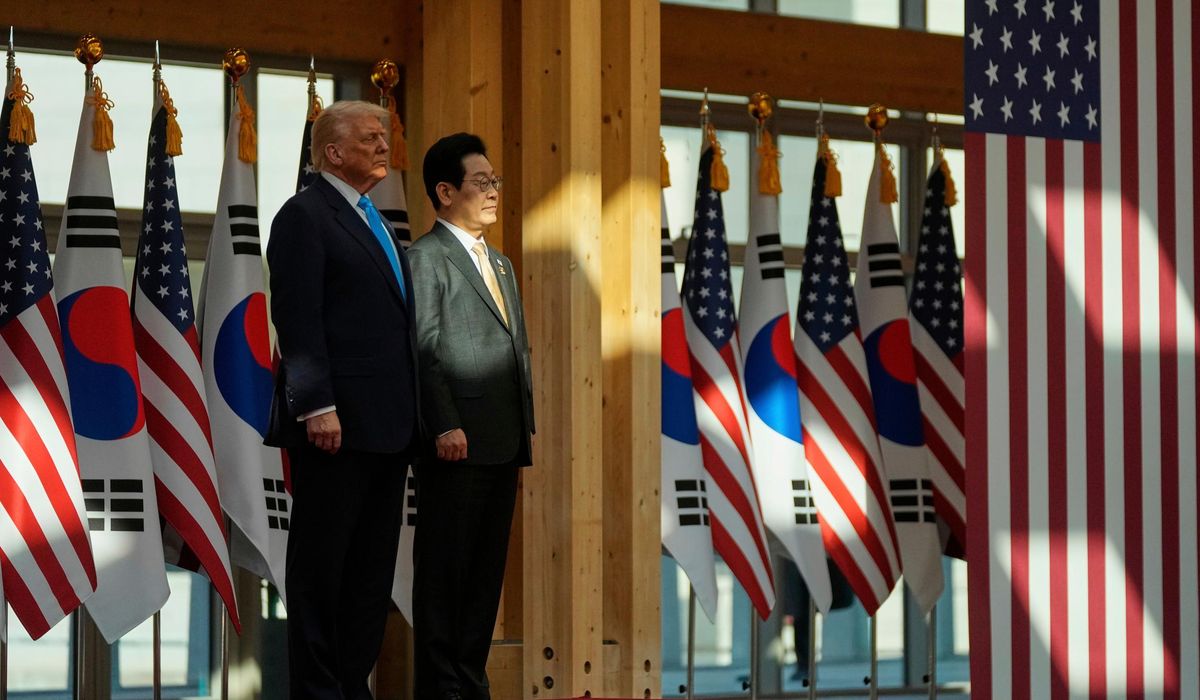
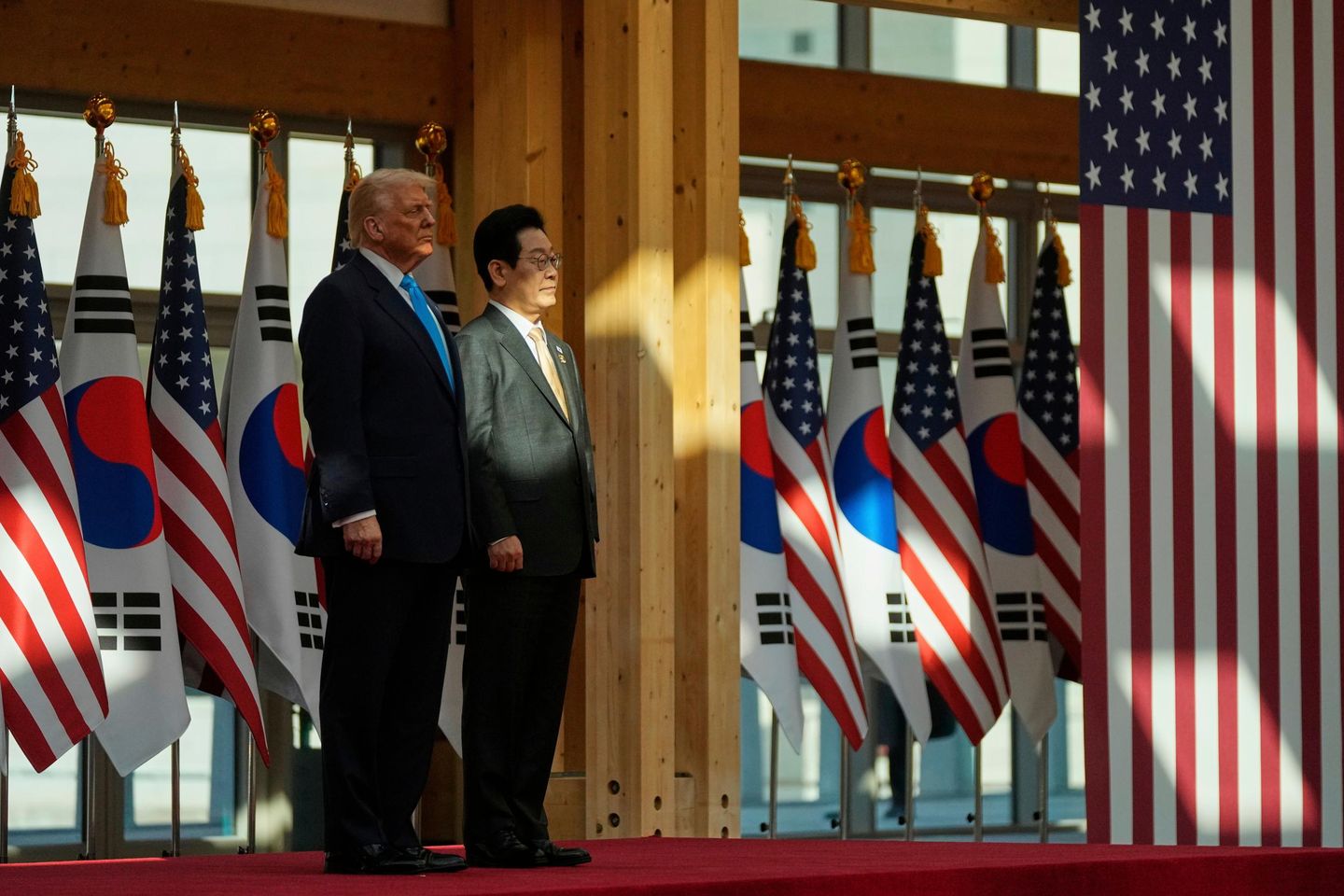
On this, Mr. Trump and liberal South Korean President Lee Jae-myung may gel.
The former has approved the latter’s acquisition of nuclear submarines, and, like Mr. Lee, has reached out to North Korea. Meanwhile, Mr. Lee resists the use of U.S. Forces Korea for regional missions, but has de-emphasized values-based policymaking.
“Lee’s ‘pragmatic diplomacy’ wants to get away from the rise of bloc politics in the region,” Mr. Moon said. “He wants good relations with Japan and the U.S., but also with China, Russia and North Korea.”
If America downsizes in the Indo-Pacific, Mr. Moon suggests two alternatives for regional democracies to stabilize security. One excludes China. One embraces it.
“We can create an anti-China alliance, but another alternative is the Organization for Security and Cooperation in Europe model.” He said. “I prefer the OSCE model, as China is near us and it is powerful. Why should we ignore or antagonize China?”
No single alliance unites the region: Washington has customarily managed regional security via bilateral mutual defense treaties with capitals including Canberra, Manila, Seoul and Tokyo.
Some — notably, former Japanese Prime Minister Shigeru Ishiba — have floated an “Asian NATO.” The idea has gained no traction.
“If U.S. disengagement became fact, we could not join an alliance against China,” Mr. Moon said. “South Korea would be the frontline.”
Seoul is not the only impediment to an Asian defense alliance, he thinks, citing two reasons.
The key security tinderbox in the region is Taiwan, but even regional democracies adhere to the “One China Policy” — meaning Taipei could not join an alliance.
And Japan’s pacifist constitution limits its military activities to self defense, reducing its usefulness as an ally. Tokyo’s 2015 constitutional reinterpretation, enabling collective defense, remains untested.
An OSCE-style security organization rather than a defensive alliance, could build confidence with personnel exchanges, crisis hotlines and joint oversight of drills, Mr. Moon said. It could be strengthened by EU-style, cross-border economic integration as a hedge against regional conflict.
While NATO and the EU excluded Russia, an Asian multilateral body should welcome in China Mr. Moon said. He claimed it could be talked out of invading Taiwan by its partners, citing economic interest.
The body should also include North Korea, he said — but the barrier there would be South Korea.
Pyongyang in 2024 officially ceased calling the Koreas a single nation awaiting unification, and dubbed the South “a hostile country.”
Seoul remains bound by its constitution, which states, “The territory of [South Korea] shall consist of the Korean peninsula and its adjacent islands.”
That defies reality.
“North Korea is a sovereign state and a member of the U.N., but we say it is an illegitimate regime, occupying our territory illegally,” Mr. Moon said. “Our constitution is organized hypocrisy — it contradicts international law.”
De-weaponized relations with Pyongyang could help Seoul navigate upcoming global uncertainties. If Mr. Trump’s second term proves successful, Mr. Moon anticipates MAGA swallowing traditional Republicanism — to the detriment of U.S. allies worldwide.
“America has been the stabilizer, the foundation of order in international systems,” he said. “If that is gone and the anchor becomes unstable, the entire system becomes unstable.
In that dangerous new world, “We must have strategic autonomy,” he warned.