
U.S. forces launched a daring raid that rescued an American fighter pilot deep behind enemy lines in Iran, President Trump said Sunday, just hours before he warned Tehran to “open the f——— Strait” of Hormuz or face major strikes on its power plants and bridges.
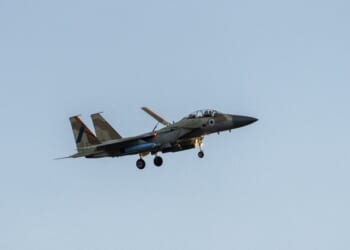
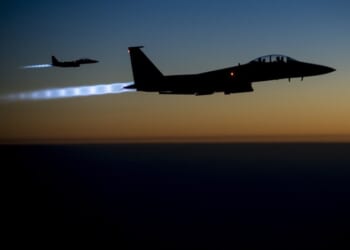
The harrowing mission to rescue the crew member, whose F-15E Strike Eagle went down over Iran early Friday, represented the most significant U.S. ground operation in Iran since the start of the war five weeks ago.
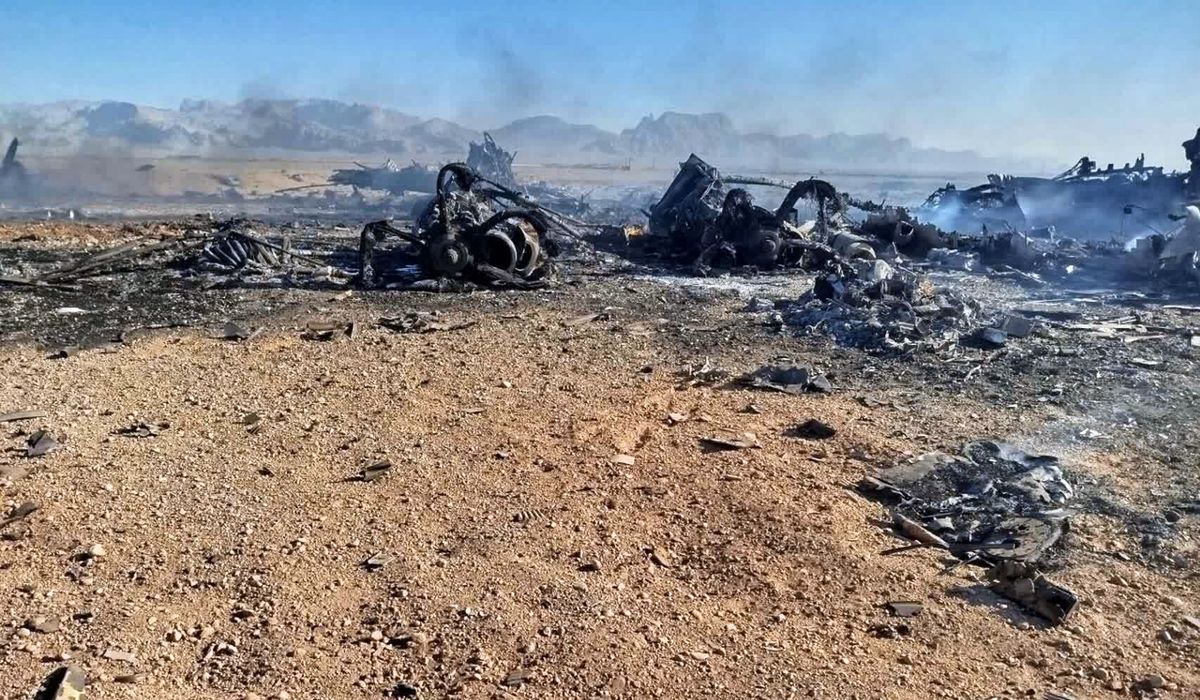
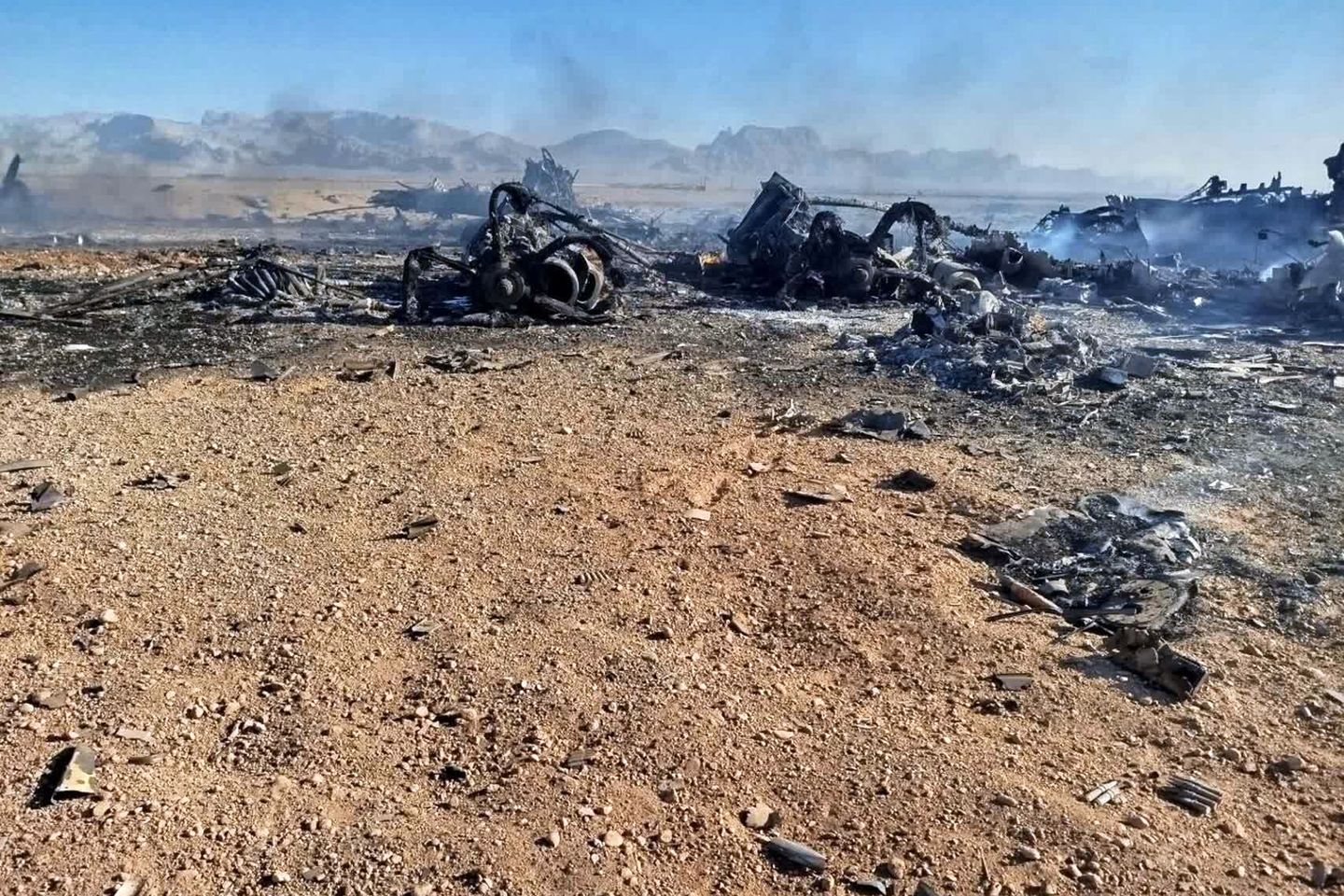
Hundreds of U.S. personnel and dozens of aircraft were involved, military sources said, and the injured pilot was extracted as Iranian forces closed in on his location.
The capture of an American by Iranian forces would have immediately changed the dynamics in the Middle East and in Washington. The regime in Tehran was keenly aware of that and offered rewards to Iranian citizens to help locate the airman.
One of the fighter jet’s crew members was rescued Friday just hours after the first shoot-down of a U.S. aircraft over enemy territory since the early days of the Iraq War in 2003.
The other airman spent two days avoiding enemy forces and waiting for U.S. rescue teams to arrive. Mr. Trump and other U.S. officials described the situation as a race against time.
SEE ALSO: Airstrike on Iran hits building near Tehran after Trump’s threat over Strait closure
“The Iranian Military was looking hard, in big numbers, and getting close,” Mr. Trump said in a Truth Social post. “This type of raid is seldom attempted because of the danger to ‘man and equipment.’ It just doesn’t happen! The second raid came after the first one, where we rescued the pilot in broad daylight, also unusual, spending seven hours over Iran.”
The exact condition of the airman, who has not been identified but who the president said was a colonel, was not immediately clear. Mr. Trump said he was “seriously wounded.”
Iranian state-run media claimed that Iran’s military destroyed several U.S. aircraft during the mission, but regional intelligence officials briefed on the mission told The Associated Press that the U.S. military blew up two transport planes because of a technical malfunction and brought in additional aircraft to complete the rescue.
Two Black Hawk helicopters were struck during the mission but managed to fly safely out of Iran, officials said.
Also Friday, a U.S. A-10 Warthog attack plane was reportedly downed near the Strait of Hormuz off the coast of Iran. Its lone pilot survived, and American forces rescued him.
Mr. Trump, Defense Secretary Pete Hegseth and other officials continued to assert that Iran’s air defenses had been decimated. Tehran clearly retains some ability to target and shoot down U.S. aircraft.
SEE ALSO: Maryland Gov. Wes Moore warns U.S. ‘very dangerously lurching into another forever war’ in Iran
Still, current and former military officers say the U.S. is in a strong position five weeks into the war, though 13 Americans have died and more than 300 have been injured. Iran’s air force, navy, army, ballistic missile and drone forces, plus its military production capability, have been heavily degraded.
“If you’re at Central Command, you’ve got to be reasonably satisfied with where you are right now,” said retired Gen. Frank McKenzie, a former head of CENTCOM, which oversees U.S. military operations in the Middle East.
“When I was the CENTCOM commander, if you had given me this situation at plus-30 days, I would have rejected it as being too optimistic by far. So we’ve had good effect,” Mr. McKenzie told CBS’s “Face the Nation” program Sunday.
The events of the past several days represent an escalation in Iran.
The apparent shoot-downs of multiple American aircraft, combined with a significant, if brief, U.S. Special Forces ground mission deep in Iranian territory, could mark a new phase in the conflict.
Mr. Trump signaled that he is prepared to authorize major strikes against Iranian power plants and bridges if Tehran does not open the Strait of Hormuz, a narrow waterway between Iran and the Arabian Peninsula.
Iran has effectively closed the strait to commercial ship traffic since the start of the U.S. military campaign in late February.
The narrow waterway is a crucial maritime corridor for moving goods, especially oil, out of the Persian Gulf.
About 20% of the world’s oil flows through the strait, and its closure has driven rapidly rising fuel prices around the world.
On March 26, Mr. Trump gave Iran 10 days to open the strait or face strikes. That 10-day window expires Tuesday.
“Tuesday will be Power Plant Day, and Bridge Day, all wrapped up in one, in Iran,” Mr. Trump wrote in an Easter Sunday Truth Social post. “There will be nothing like it!!! Open the F——-’ Strait, you crazy bastards, or you’ll be living in Hell – Just watch! Praise be to Allah.”
Iranian officials dismissed those threats.
“Iranian society generally does not pay attention to his statements, as it believes he lacks personal, behavioral and verbal balance, and constantly shifts between contradictory positions,” Sayed Reza Salihi-Amiri, Iran’s culture minister, told reporters in the region.
Other Iranian officials indicated that they may be willing to reopen the strait, but only if they can collect revenue from transiting ships and use it to repair damage from U.S. and Israeli airstrikes over the past five weeks.
The U.S. is in negotiations with Iran, but the Trump administration seems unlikely to agree to those conditions.
Mr. Trump also is weighing more ground operations inside Iran.
U.S. ground troops may be ordered to seize key Iranian energy infrastructure sites such as Kharg Island or smaller islands in the Strait of Hormuz. They also may try to remove Iran’s stockpile of enriched uranium at locations across the country.
Capitol Hill has skeptics, including some influential Republicans, about ground operations, though some lawmakers acknowledge that seizing Iran’s uranium stockpile may require such missions.
“I think the question moving forward with respect to any troops on the ground would be: For what purpose? And I think the only purpose that I could see would be to get at the enriched uranium. And I think that is something that does need to be discussed with Congress in a classified setting,” Rep. Michael Lawler, New York Republican, told NBC’s “Meet the Press” program Sunday.