
The socialist-led government of Spain has closed its airspace to U.S. military aircraft involved in operations against Iran, significantly escalating its opposition to the ongoing conflict. Spain’s Defense Minister Margarita Robles confirmed the decision on March 30, stating, “We don’t authorize either the use of military bases or the use of airspace for actions related to the war in Iran.”
She emphasized that the move reflects Spain’s position that the American led campaign is “unilateral and against international law.”
Madrid also has a long-running ban on ships transferring arms and ammo to Israel. The measure expands on Madrid’s earlier refusal to allow U.S. forces to operate from key joint bases, including Naval Station Rota and Morón Air Base, both critical hubs supporting American and NATO operations in Europe, Africa, and the Middle East.
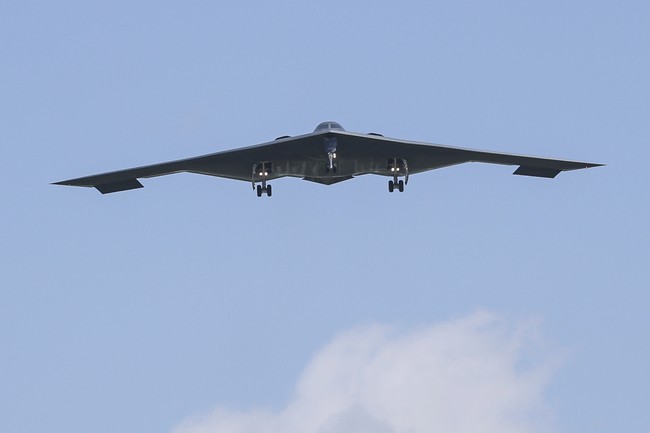
Under the new restrictions, U.S. aircraft, including bombers, fighter jets, and refueling planes, must reroute around Spanish territory, complicating flight paths from bases in the United Kingdom to targets in the Middle East.
The airspace ban applies broadly to all missions tied to the Iran conflict, but Spanish officials have granted exemptions for emergency landings and routine logistical support, including assistance for the approximately 80,000 U.S. troops stationed across Europe. The Pentagon is turning to alternatives, such as using RAF Fairford in England, to sustain air operations.
Spanish Prime Minister Pedro Sánchez has been one of Europe’s most outspoken critics of the war, calling it “illegal, reckless, and unjust.”
“We have denied the United States the use of the Rota and Morón bases for this illegal war. All flight plans involving operations in Iran have been rejected. All of them, including those for refueling aircraft,” Sánchez told the Spanish newspaper El Pais.
His government has taken additional steps to distance Spain from the conflict, including withdrawing its ambassador from Israel and rejecting all flight plans connected to military operations against Iran.
“This is part of a clear decision not to participate in or contribute to a war initiated unilaterally,” Economy Minister Carlos Cuerpo said in a radio interview, acknowledging the potential for strained relations with the United States.
Despite the move, Spain claims that it has reaffirmed its commitment to its NATO obligations, including defense cooperation involving allies such as Turkey and Cyprus. Spanish officials stressed that the restrictions are limited specifically to the Iran conflict and do not signal a broader withdrawal from its alliance responsibilities.
The decision has drawn sharp criticism from President Donald Trump, who has threatened economic retaliation, including a potential embargo on Spanish goods.
“We don’t want anything to do with Spain,” Trump said on March 3.
The escalating dispute underscores growing divisions among Western allies over the conflict. Spain’s stance echoes past transatlantic splits, notably during the Iraq War, when key European allies declined to support the U.S. led military action against Saddam Hussein.
Other European leaders have also expressed reluctance to deepen involvement. German Defense Minister Boris Pistorius recently described the current conflict as an economic “catastrophe,” while Britain’s Prime Minister Keir Starmer stated that London would not be “dragged into” the war.
Meanwhile, U.S. Secretary of State Marco Rubio, in an interview with Al Jazeera, downplayed Spain’s challenge to the alliance, as American forces continue to defend the Iberian nation. Rubio said that NATO’s military structure “allows us to station troops and aircraft and weapons in parts of the world that we wouldn’t normally have bases, and that includes in much of Europe.”
“But if NATO is just about us defending Europe if they’re attacked, but then denying us basing rights when we need them, that’s not a very good arrangement,” Rubio added. “That’s a hard one to stay engaged in and say this is good for the United States. So all of that is going to have to be reexamined.”
The Sánchez government continues to refuse to increase its defense spending in accordance with a deal reached by other NATO members and the Trump administration. Spain said that it will only spend 2.1% of GDP on defense, instead of the 5% that the rest of the other 31 members of the military alliance agreed upon.
With tensions rising and alliances under strain, Spain’s airspace closure marks a major rift in the traditional Western military alliance system, raising questions about the future of the United States and its NATO partners moving forward.
Support and follow PJ Media’s coverage of breaking news and key events. Join PJ Media VIP and use promo code FIGHT to get 60% off your membership.