
President Trump’s Republican allies in Congress responded Sunday to concerns from lawmakers in both parties that a U.S. Navy commander’s decision to launch a second strike on a capsized boat spotted with two survivors could constitute a war crime.
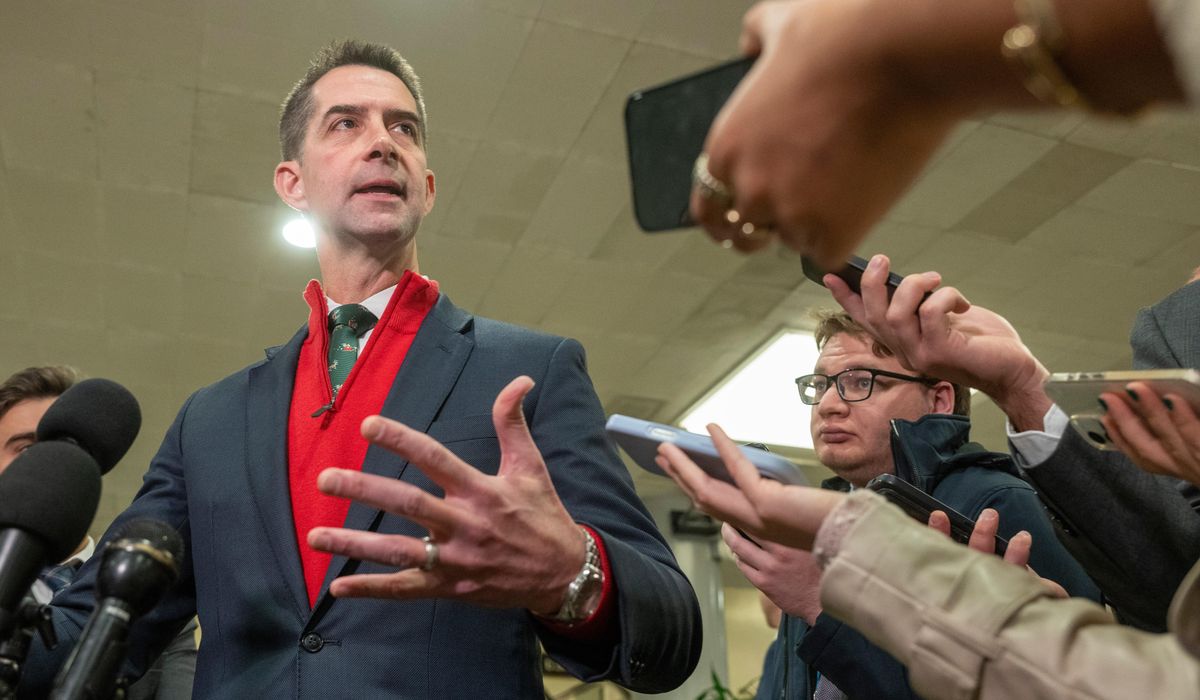
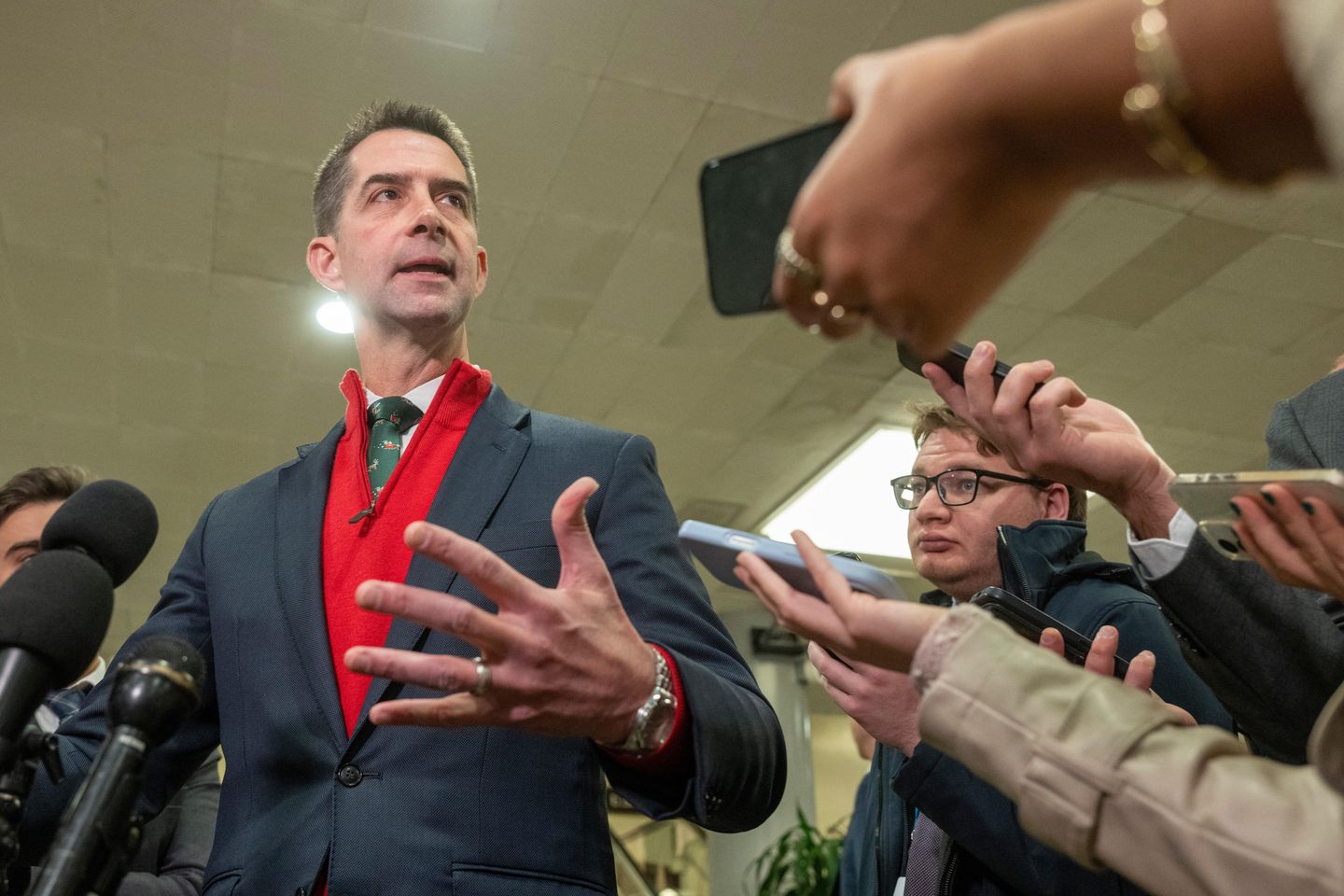
Sen. Tom Cotton, Arkansas Republican, said the Sept. 2 strike was a legal operation against a boat that was loaded with narcotics and bound for the U.S. He said the military has been ordered to strike such boats, crewed by associates or members of foreign terrorist organizations that are trying to kill Americans.
“Before our military conducts such a strike, they have multiple sources of intelligence. They give high confidence that everyone on that boat is a foreign drug trafficker, not an innocent civilian who is being ‘human trafficked,’ for instance,” Mr. Cotton said on NBC’s “Meet the Press.”
Sen. Tammy Duckworth, Illinois Democrat, accused the Trump administration of sanctioning a war crime in the follow-on attack in September that killed two survivors of a destroyed vessel.
“It was essentially murder with that ‘double-tap’ strike,” she said on CNN’s “State of the Union.” “If a pilot bails out and he’s in a rubber dinghy in the middle of the ocean, under all international laws of warfare, you are supposed to help render aid to that individual.”
Republican Sens. Rand Paul of Kentucky and Lisa Murkowski of Alaska have also been sharply critical of the Sept 2 incident.
SEE ALSO: How Trump’s strikes on alleged drug boats measure up to Obama’s drone assassination missions
The White House has said Defense Secretary Pete Hegseth delegated authority for finishing the Sept. 2 mission to Adm. Frank M. “Mitch” Bradley, commander of U.S. Special Operations Command.
During a speech at the annual Reagan National Defense Forum on Saturday, Mr. Hegseth stood by the admiral’s decision to launch a second strike. He said the days of foreign “narco-terrorists” operating freely near the U.S. borders are over.
He called them “the al Qaeda of our hemisphere.”
“We are hunting them with the same sophistication and precision that we hunted al Qaeda,” Mr. Hegseth said. “We’re tracking them, we’re killing them, and we’ll keep killing them so long as they are poisoning our people with narcotics so lethal that they’re tantamount to chemical weapons.”
Mr. Hegseth said detailed intelligence work informs whether U.S. naval warships will target suspected drug boats. Intelligence helps determine where the vessels are originating, who is piloting them and, most important, what cargo they are hauling.
“At the top of all this, the president has designated these as terror organizations, poisoning and threatening the American people, making them a target, just like al Qaeda,” he said.
SEE ALSO: Hegseth defends strike on drug-boat survivors, touts Trump’s Reagan-style defense policies
Mr. Cotton said it was simply not the case that U.S. forces were ordered to kill helpless survivors of the initial attack.
“They were not floating in the ocean on a wooden plank or in life jackets. They were on the capsized vessel. They were not incapacitated in any way,” he said. “It was entirely appropriate to strike the boat again to make sure that its cargo was destroyed.”
Rep. Adam Smith of Washington, the top Democrat on the House Armed Services Committee, viewed the same video of the “double tap” mission as his Republican colleagues but drew a dramatically different conclusion.
“The boat was clearly incapacitated. A tiny portion of it remained capsized, the bow of the boat,” he said on ABC News’ “This Week.” “They had no communications device, [and] certainly they were unarmed.”
White House claims that the drugs had somehow survived the initial attack were “hard to square” with the images on the surveillance tape, Mr. Smith said.
“The boat was adrift. It was going where the current was going to take it, [and] these two were trying to figure out how to survive,” he said.
Mr. Hegseth said the first strike mission lasted 30 to 40 minutes. He was satisfied that any legal questions had been satisfactorily answered. He left before Adm. Bradley ordered the second strike.
“A couple of hours later, I was told, ‘Hey, there had to be a re-attack because there were a couple of folks who could still be in the fight [with] access to radios,’” he said. “There was a link-up point with another potential boat. Drugs were still there, [and] they were actively interacting with them.”
Mr. Hegseth said he agreed that the second strike was appropriate. Anyone with experience in Afghanistan or Iraq over the past 20 years knows that follow-on strikes on enemy positions on the battlefield aren’t uncommon.
“I fully support that strike. I would have made the same call myself,” he said. “In this particular case, it was well within the authorities of Adm. Bradley, who is an incredible American.”
He said U.S. forces have launched dozens of similar strikes using the same criteria. The Pentagon is reviewing the video of the Sept. 2 secondary strike to protect any potential intelligence sources and methods before it could be released to the public.
Mr. Smith said he believes the Trump administration is reluctant to release the video because it doesn’t want the public to learn firsthand what happened with the second strike.
“And is this really about drugs, or is it about regime change in Venezuela? Are we about to go to war with Venezuela?” Mr. Smith said. “The president has alluded to that repeatedly over the course of the last several weeks, couple of months now. That too, I think, would be very, very bad for the national security interests of our country.”
Sen. Eric Schmitt, Missouri Republican, said President Trump is well within his authority to “blow narco-terrorists out of the water.”
Congress delegated the authority for the White House to designate terrorist organizations, which he has done, Mr. Schmitt said on ABC’s “This Week.”
“He sent a letter to Congress saying he’s going to initiate these strikes,” Mr. Schmitt said. “We’ve had regular briefings about it, including from Secretary of State [Marco] Rubio and high-ranking officials in the Department of Defense.”
He said Democratic opposition to the strikes on suspected drug boats is based on their goal to oust Mr. Hegseth from the Pentagon.
“That’s what this whole thing’s been about. They didn’t want him confirmed, [and] they don’t want a ‘realist’ in place,” Mr. Schmitt said. “We have core national interests at stake: the homeland and the Western Hemisphere and the rise of China. That’s what this administration is about.”