

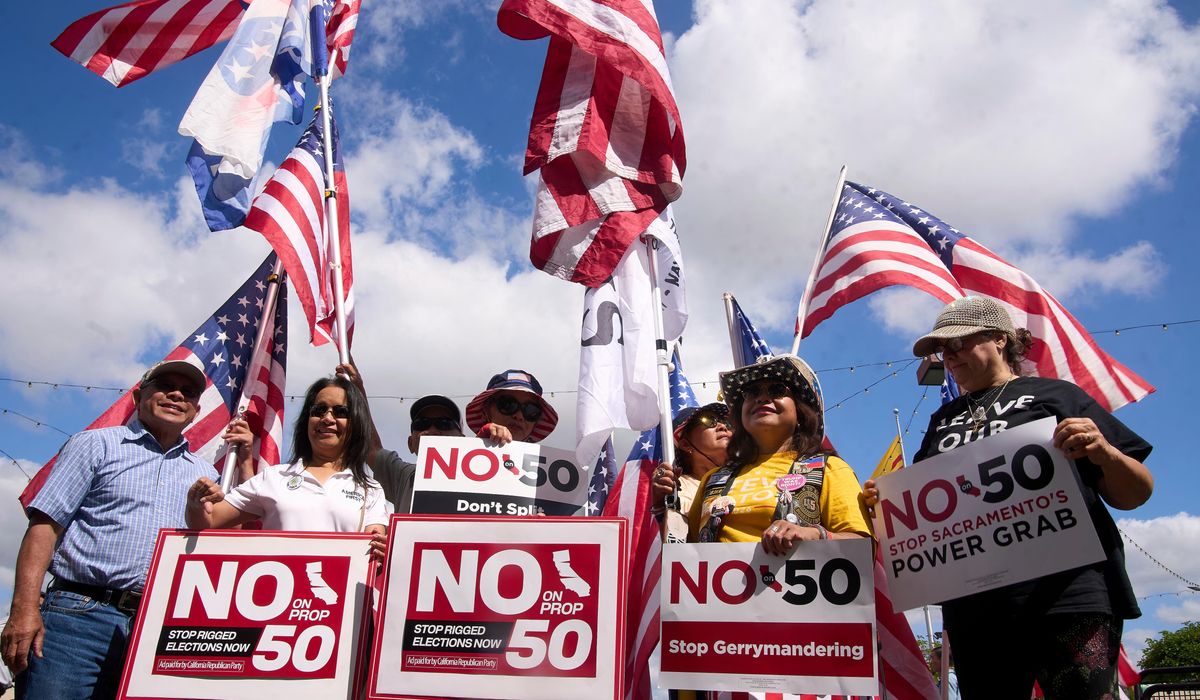
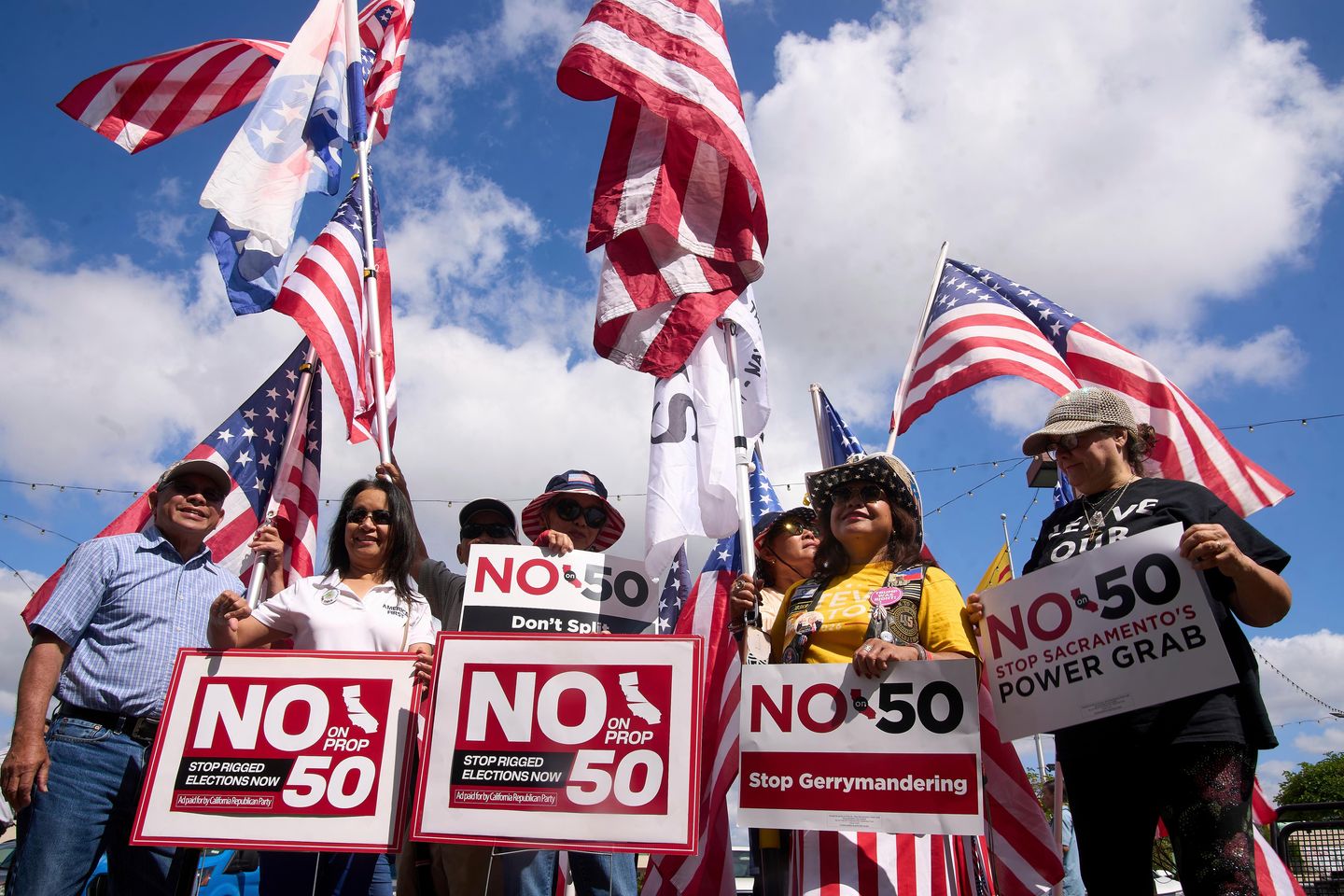
Republicans rushed to the Supreme Court this week asking the justices to block California’s new Democrat-friendly congressional map.
A three-judge panel earlier this month backed the state’s map. The California Republican Party, one of the key plaintiffs, asked Justice Elena Kagan to intervene and block the map’s use right now, restoring the old map for use in November.
The Supreme Court gave the state a week to file a reply.
On the line is serious political power. Experts say the state’s new map could swing five House seats from Republican to Democrat in this year’s elections.
Courts have generally upheld maps that include big political swings, deeming political gerrymandering to be beyond the reach of courts.
But the Republican challengers say California’s new map drifted beyond politics to include racial gerrymandering, which is illegal. They pointed to a particular district they said was drawn to boost Hispanic voters, regardless of the political benefits.
“That there were general partisan goals on a statewide basis for the redistricting does not cure the racial gerrymandering in particular districts,” the Republican Party said in its application to the Supreme Court.
The lower court’s ruling was 2-1.
“We find that the evidence presented reflects that Proposition 50 was exactly what it was billed as: a political gerrymander designed to flip five Republican-held seats to the Democrats,” wrote U.S. District Judge of the Central District of California Josephine Staton, an Obama appointee, in the majority opinion.
She said the fact that state voters were asked to — and did overwhelmingly — approve the map helps cleanse it of any taint from illegal racial motivations.
U.S. Circuit Judge Kenneth K. Lee, a Trump appointee, dissented.
He said the evidence was clear that Paul Mitchell, the mapmaker who drew the eventual map adopted by the Legislature and voters, looked to race to create at least one of the new districts.
“To be sure, California’s main goal was to add more Democratic congressional seats. But that larger political gerrymandering plan does not allow California to smuggle in racially gerrymandered seats,” Judge Lee wrote.
The Trump Justice Department, which had intervened in the lawsuit against California’s new map, also filed a brief asking the justices to order a return to the original lines.
Solicitor General D. John Sauer said Mr. Mitchell’s refusal to testify about his decision-making made the whole operation suspect.
California’s Legislature redrew its map as retaliation against Texas, where Republicans drew a new map that could net the GOP five seats.
California’s map is usually drawn by an independent commission, so to surmount that, the state put its Democrat-heavy map to a referendum, which passed in November.
A lower three-judge court had ruled Texas’ map was an illegal racial gerrymander, but the Supreme Court halted that decision, letting Texas use the GOP-friendly map in November.
Mr. Sauer said the California case is different because the state has been unable to provide a race-neutral reason for drawing the one Hispanic-heavy district.