

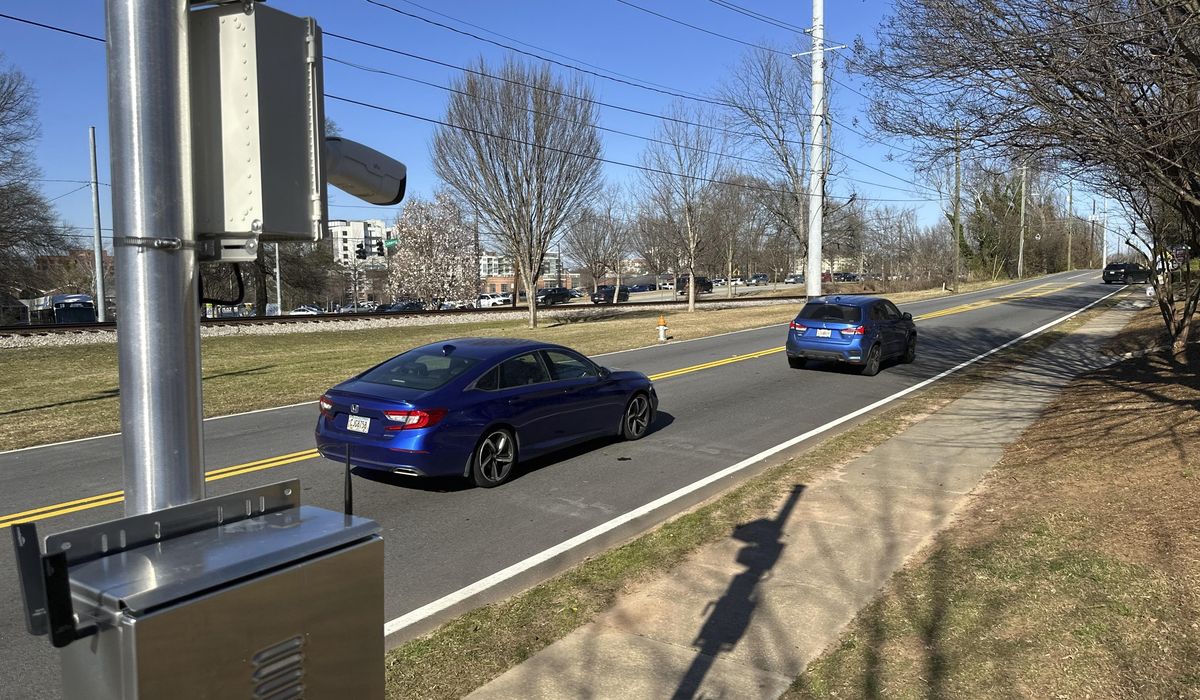
A bill in the Maryland Senate would allow the state to enter into reciprocal agreements with other jurisdictions for speed and traffic camera violations.
If Senate Bill 173 or its equivalent House of Delegates Bill 249 became law, the head of the Motor Vehicle Administration would be able to make deals “to provide for reciprocal enforcement of violations recorded by traffic control signal monitoring systems and speed monitoring systems between this state and the other jurisdiction.”
If Maryland and the other jurisdiction reached such an agreement, then a driver from the latter who was delinquent in paying for a speed or traffic camera violation committed in Maryland would possibly be unable to register or re-register their vehicle.
Conversely, if a Maryland driver committed a speed or traffic camera violation in the other jurisdiction and ignored it, the Motor Vehicle Administration would be authorized if either bill becomes law to refuse vehicle registration or re-registration for that Maryland driver.
The bills were filed at the request of Maryland Gov. Wes Moore, a Democrat, and the Maryland Department of Transportation due to a spate of non-Marylanders racking up speed camera, traffic work zone camera or other traffic camera violations without paying.
“Since 2010, we’ve had 770,000 unpaid work zone speed enforcement citations. Sixty-three percent are attributed to out-of-state vehicles,” Maryland Department of Transportation Assistant Secretary for Project Development and Delivery Joe McAndrew told WTOP-FM.
D.C. Councilmember Charles Allen approved the bill, telling the radio station that “I welcome greater partnership across the DMV to hold dangerous drivers accountable in MD, VA and DC.”
Unpaid speed and traffic camera violations by Maryland and Virginia drivers in particular have led Attorney General for the District of Columbia Brian Schwalb to file multiple lawsuits against the worst offenders to try and recoup the unpaid fines.
Senate Bill 173 is due for a hearing on Wednesday; there is no hearing date set yet for its House of Delegates equivalent. If either bill is passed, the resulting law would go into effect on Oct. 1.