
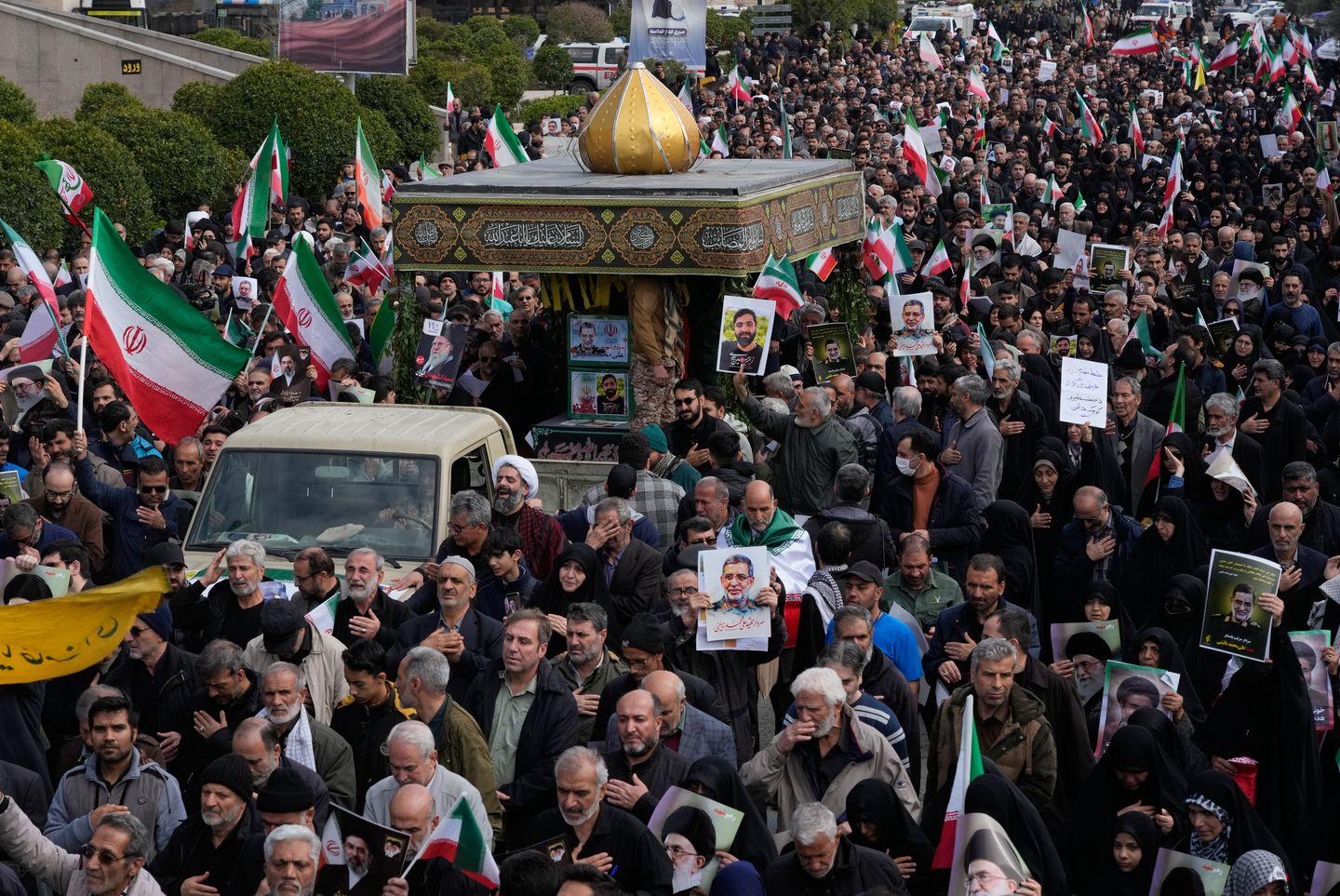
An intense Israeli assassination campaign has not yet been enough to bring down Iran’s hardline regime, which is still standing despite losing scores of its top officials over the past four weeks.
Analysts question whether Israel’s approach can generate the instability required for regime change in Tehran, or if it could inadvertently consolidate power among Iranian hardliners.
President Trump this week said the U.S. is negotiating with current Iranian officials, suggesting that Washington may allow the Iranian government to survive the current war despite Israel’s ongoing effort to eliminate its leaders.
Israeli airstrikes last week killed three senior Iranian officials deeply involved in domestic security operations: former Supreme National Security Council leader Ali Larijani, Basij militia commander Gholamreza Soleimani and former Minister of Intelligence Esmaeil Khatib.
Israeli leaders said the assassination strategy intends to further weaken Iran’s internal security apparatus and spark a popular revolution.
“We are undermining this regime in the hope of giving the Iranian people an opportunity to remove it,” Israeli Prime Minister Benjamin Netanyahu said in an address last week.
Mr. Trump delivered a somewhat similar message at the outset of the conflict on Feb. 28. He told the Iranian people to “take over your government” when the U.S. campaign against Iran ends.
In the weeks since, the U.S. and Israel have devastated Iran’s military with a series of targeted strikes against drone depots, ballistic missile production sites, naval vessels, and other assets.
Israeli airstrikes were also responsible for the deaths of Supreme Leader Ayatollah Ali Khamenei and scores of other defense and intelligence officials in the opening hours of the war.
But the Iranian regime survived. Analysts say Israel’s assassination campaign isn’t likely to bring large swaths of Iranians into the streets to overthrow the Islamic republic, especially with bombs still falling near major Iranian cities. Iranian paramilitary organizations have also maintained their power over the country’s streets.
Iran also has dozens of executive security officials who can easily replace leaders like Larijani. The Iranian government appears to have plans to replace key leaders relatively quickly.
“There seems to be some sort of hierarchical, preordained setup in place when it comes to communication,” said Bamo Nouri, senior lecturer in international relations at the University of West London and honorary research fellow at City St. George’s University of London.
“So far, we’re not seeing anything change or any hint of a difference of approach based on the effectiveness of these strikes,” he said in an interview. “If anything, they seem to have a unifying hardening effect.”
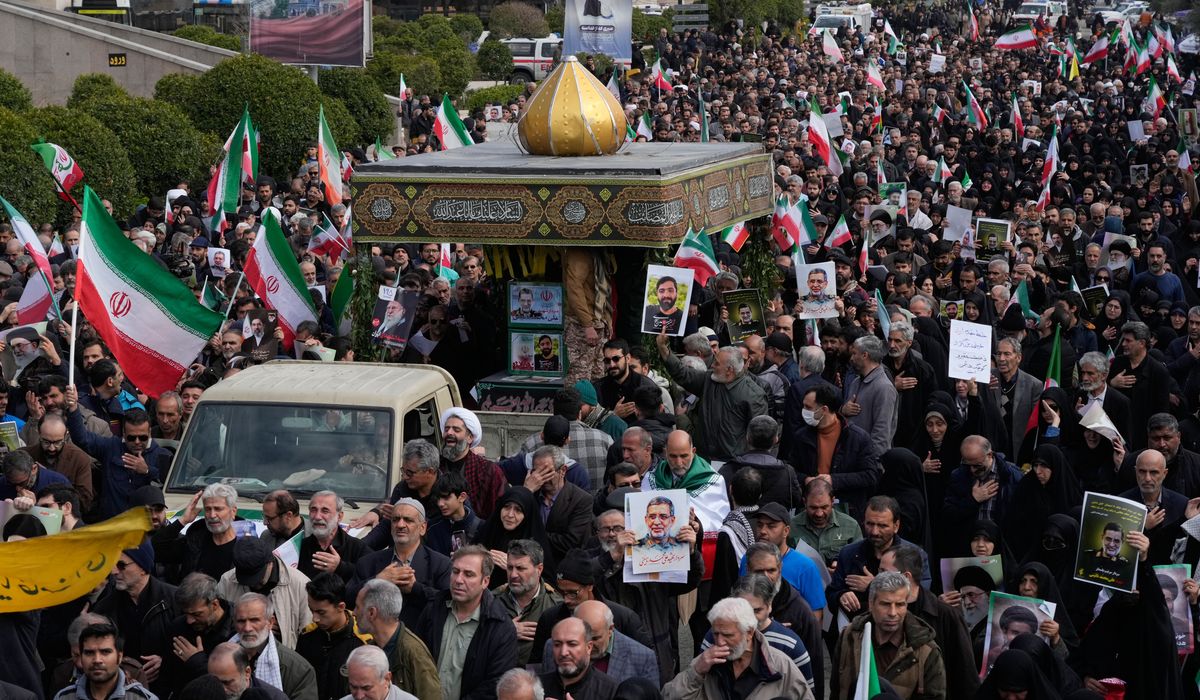
Notably, Khamenei was replaced within a week, despite serving as Iran’s supreme political and spiritual authority for more than three decades. The death of Khamenei had long been viewed as a potential seismic event that could upend the Iranian government.
Instead, his son, Ayatollah Mojtaba Khamenei, took the job and so far appears to be maintaining his father’s hardline position against capitulation.
Mr. Netanyahu last week defended the assassinations and argued that they have sparked “defections” among Iranian officials. He also said that Israeli and U.S. strikes were creating chaos in the Iranian government.
Still, Iran remains able to fill leadership gaps. Larijani was also replaced relatively quickly. Iranian President Masoud Pezeshkian announced this week that former Revolutionary Guard General Mohammad Bagher Zolghadr would replace Larijani as the head of country’s Supreme National Security Council.
Empowering Iran’s hardliners?
Mr. Zolghadr’s appointment reinforces concerns among analysts that Israel’s campaign is consolidating power in the hands of hardliners.
Mr. Zolghadr is widely viewed as a dedicated hardliner within Tehran who maintained extensive ties to Khamenei. He is also deeply connected to Iran’s internal security apparatus, having worked with the Basij, Iran’s massive paramilitary force, and within the country’s judiciary to crush internal dissent.
His background contrasts sharply with Larijani’s, who was seen by many Iran-watchers as a pragmatic politician able to work with both Khamenei’s hardline allies and reformist officials. He was reportedly a major Iranian voice behind restarting nuclear negotiations with the U.S. in February.
Israel has used a version of its current assassination strategy before against Hamas and Hezbollah. During Israel’s military campaign in the Gaza Strip, its military successfully killed the head of Hamas’ military arm, Mohammed Sinwar, and his older brother Yahya Sinwar, the primary architect of the Oct. 7, 2023, terror attacks on Israel.
Israel also targeted key leaders of Lebanon-based Hezbollah. Iran is the primary financial supporter of both Hamas and Hezbollah.
Eliminating key officials within Iran’s leadership structure and replacing relative moderates with hardliners could make it harder for the U.S. and Israel to make a peace deal with Iran, according to analysts.
“If the Israelis continue doing what they’ve done, assassinate these senior figures, then at some point, when it comes to the politics of this war and how to wrap it up, then you will have the fundamental problem of who’s actually going to be the political voice from the other side,” said Alex Vatanka, senior fellow at the Middle East Institute.
“Who can actually coordinate enough to be able to say, ‘we can deliver you this, that or the other,’” Mr. Vatanka said.
Mr. Trump has offered several mission objectives for the U.S. war, including eliminating Iran’s ballistic missile and drone production sites, and its uranium enrichment infrastructure.
Mr. Trump said this week that his administration had held productive talks with at least one top Iranian official, suggesting the U.S. is conducting backroom diplomacy even as Israel targets Iran’s leaders. But the president has so far refused to name his Iranian contact, arguing that revealing their identity could endanger their life.
Media reports suggest that Iran’s parliamentary speaker, Mohammad Bagher Ghalibaf, has been flagged as a possible U.S.-backed figure who could lead the country after the war. Mr. Ghalibaf has publicly denied that any talks have taken place.
Iran’s attacks on domestic protesters earlier this year signaled to the regime’s opponents what could happen if they took to the streets again.
Iranian authorities killed thousands of those protesters in January after weeks of widespread demonstrations. After receiving approval from Khamenei, Iranian police and paramilitary organizations reportedly opened fire on crowds of protesters. Several people accused of orchestrating the protests were also arrested and imprisoned.