
SIMI VALLEY, Calif. — President Trump’s Golden Dome czar says he has held “one-vs.-one” talks with more than 300 private companies in recent months to hash out the secretive architecture of the futuristic missile defense shield that the administration is determined to put into operation over the entire U.S. homeland by mid-2028.
In his first public remarks since being named to the position in June, Gen. Michael A. Guetlein, vice chief of space operations at the U.S. Space Force, told an audience at the annual Reagan National Defense Forum that although the layered design of the Golden Dome remains classified, he is confident that “our industry partners have a pretty good insight into what we’re doing.”
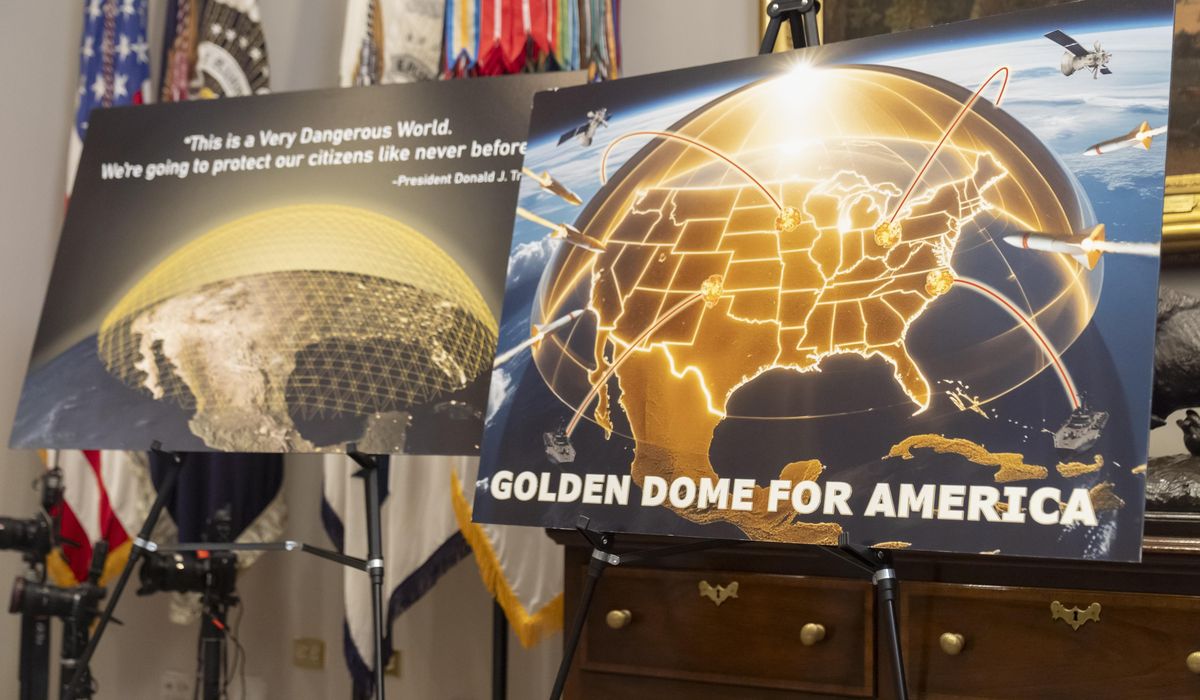
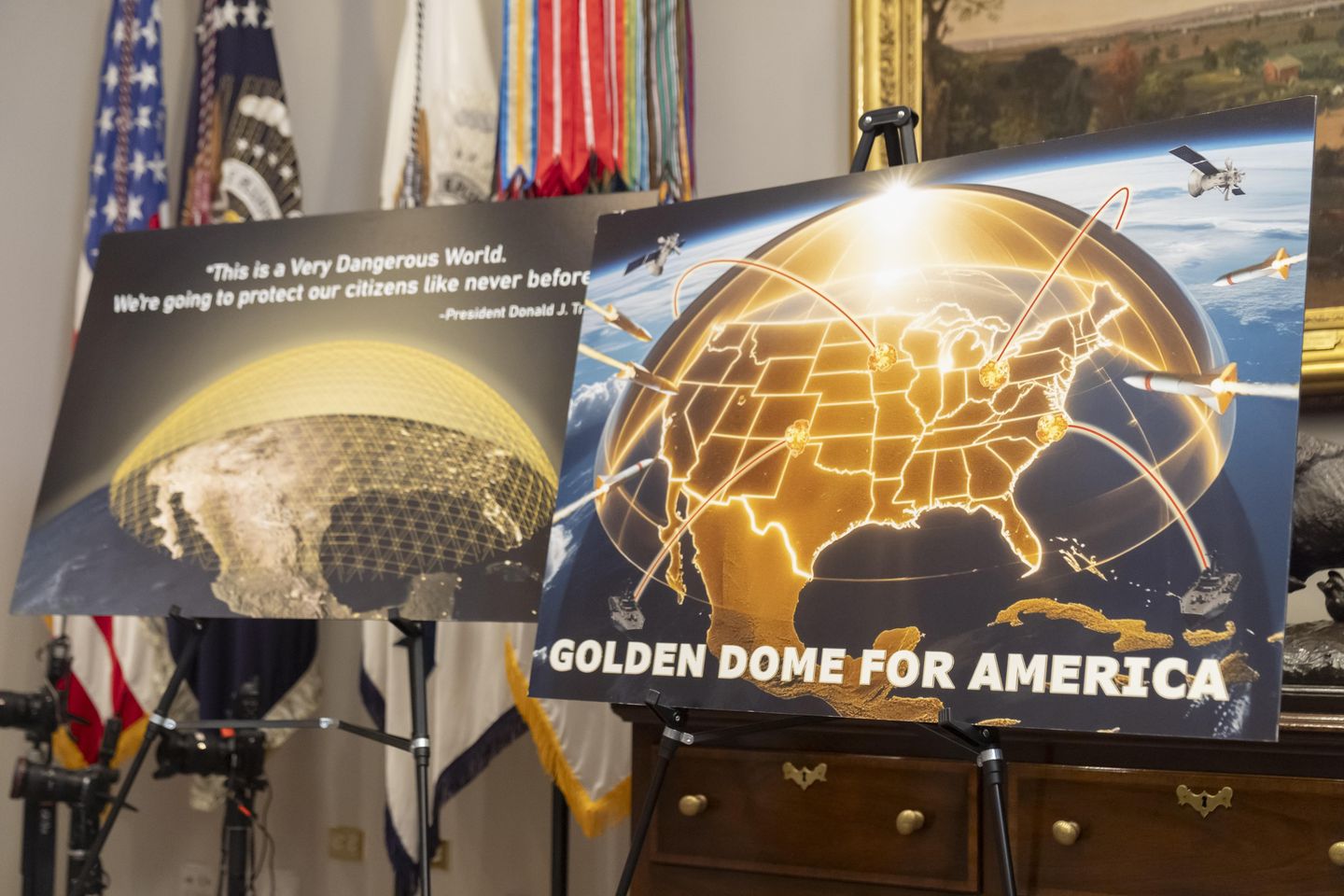
The Golden Dome is a signature and potentially costly national security initiative of the Trump administration.
Speculation over the technology it will entail — specifically the extent to which it will be space-based or revolve mainly around more conventional ground-based missile interceptor systems — has been rampant for months. In August, the Pentagon issued a gag order to prevent officials involved from speaking about it publicly.
Gen. Guetlein cracked the lid on that gag order during an appearance Saturday at the forum — one of the top yearly gatherings of political leaders and national defense stakeholders — by suggesting broadly that the system will integrate existing ground-based missile defense assets, as well as futuristic space-based assets, including potentially space-based missile interceptors.
“Golden Dome is about building a layered defense capability for the nation to protect the nation against an attack against the homeland,” he said.
Secrecy around the space layer remains tight. The Space Force quietly awarded small contracts to develop prototypes for space-based interceptors last month to a group of companies, Bloomberg News reported. The Pentagon did not identify the companies by name, and the contracts fell below the dollar amount threshold that would require detailed disclosures.
In his remarks over the weekend, Gen. Guetlein defended the need for secrecy, given that the intelligence agencies of U.S. adversaries, particularly China and Russia, are watching closely.
“Golden Dome is about partnering with industry in new and innovative ways … and to do it with transparency,” Gen. Guetlein told an audience inside the Ronald Reagan Presidential Library that was packed with executives from several top American defense technology companies.
“That transparency may not come in an industry symposium, but it is coming in one-vs.-ones,” he said. “It’s not coming in an industry symposium, because you guys are not the only ones in the audience. There are people in that audience that I don’t want to know what we’re doing. I don’t want to tell what we’re doing. I don’t want to give them a heads up. But I do know that our competitive advantage, being our industrial partners, are all in on it and are supportive, so they are pretty well informed.”
Russian ‘nesting dolls’ in space
Gen. Guetlein said Moscow and Beijing have militarized space.
“Space is not a sanctuary anymore. The adversary has been holding space at risk for years now,” he said. “The Chinese have the ability to launch a missile at a satellite — take out a satellite. The Chinese have the ability to have a robot in space, kidnap … another satellite, take it someplace else. The Russians have nesting dolls in space and a satellite spawns another satellite, spawns a kill vehicle. So space is already contested.”
He said an undergirding principle of the Golden Dome is to establish “a credible deterrent capability” against China and Russia.
Congress approved $24.5 billion in funding for the initiative this year. Defense industry sources indicate that the system’s development will incur significantly higher costs over the coming years.
A consensus in the national security community is that the missile shield is urgently needed amid rising nuclear and ballistic missile threats from not only China and Russia but also North Korea and Iran.
Some lawmakers are closely monitoring the funds and have expressed concern about the transparency of how they are spent.
The Senate Armed Services Committee’s ranking Democrat, Sen. Jack Reed of Rhode Island, has warned that the Golden Dome could create a kind of “slush fund” for the Trump administration to spend however it sees fit.
Yet support for the initiative is broad. The annual Reagan National Defense Survey, published ahead of the forum, showed that 68% of Americans polled expressed support for developing a Golden Dome.
Sen. Deb Fischer, Nebraska Republican and member of the Armed Services Committee, defended the secrecy around the initiative.
“We have major adversaries who are very interested in anything that we do in this country, and especially with regards to this, and so we need to be very careful in holding a lot of this information close for the time being,” she said.
Incremental rollout
Air Force Secretary Troy Meink was also on the panel with Ms. Fischer and Gen. Guetlein. So was Kathy Warden, the CEO, president and chair of the board of directors at Northrop Grumman.
Ms. Warden said there are “many capabilities that exist in our nation today that can be brought to bear” to make Golden Dome a reality, and “it is going to take an all-of-industry effort.”
“There’s an industrial base with companies of all sizes that are ready to get behind this mission and support it with investment in not only people, but also the capacity needed to build it out,” she said. “I’m very confident that this industry has what it takes to field this capability for our nation.”
Gen. Guetlein said “the technology exists” to deliver the Golden Dome.
“This is not a technology problem. We have proven all the elements of the technology in one way or another,” he said. “The real challenge is, how do I bring together capabilities that have never been integrated — networked together into a system of systems type architecture, and then how do I leverage the entire innovation industrial base of the United States?”
The general said the Golden Dome is likely to be rolled out in pieces and may evolve technologically over time. “We will be incrementally building out that layered defense capability,” he said.
“The president has requested that we deliver this capability, an operational capability, in the summer of 2028, and we are on that timeline to deliver,” Gen. Guetlein said. “That will not be the final capability, but we will have the ability to protect and defend the nation against advanced threats by the summer of 2028.”