
DOHA, Qatar — The Trump administration’s new national security strategy has rejected what it calls America’s “misguided experiment” of hectoring Gulf monarchies and declared “the days in which the Middle East dominated American foreign policy in both long-term planning and day-to-day execution are thankfully over.”
Gulf officials at the annual two-day Doha Forum that wrapped up Sunday made clear that Washington’s more conciliatory tone alone won’t suffice. The security landscape they navigate has become more dangerous even as the U.S. de-prioritizes the region.
Israel’s Sept. 9 strike on central Doha, which killed Hamas members and a Qatari security officer, crystallized what Gulf governments have been trying to communicate: they’re no longer just managing threats from Iran. They’re buffering Israel, too.
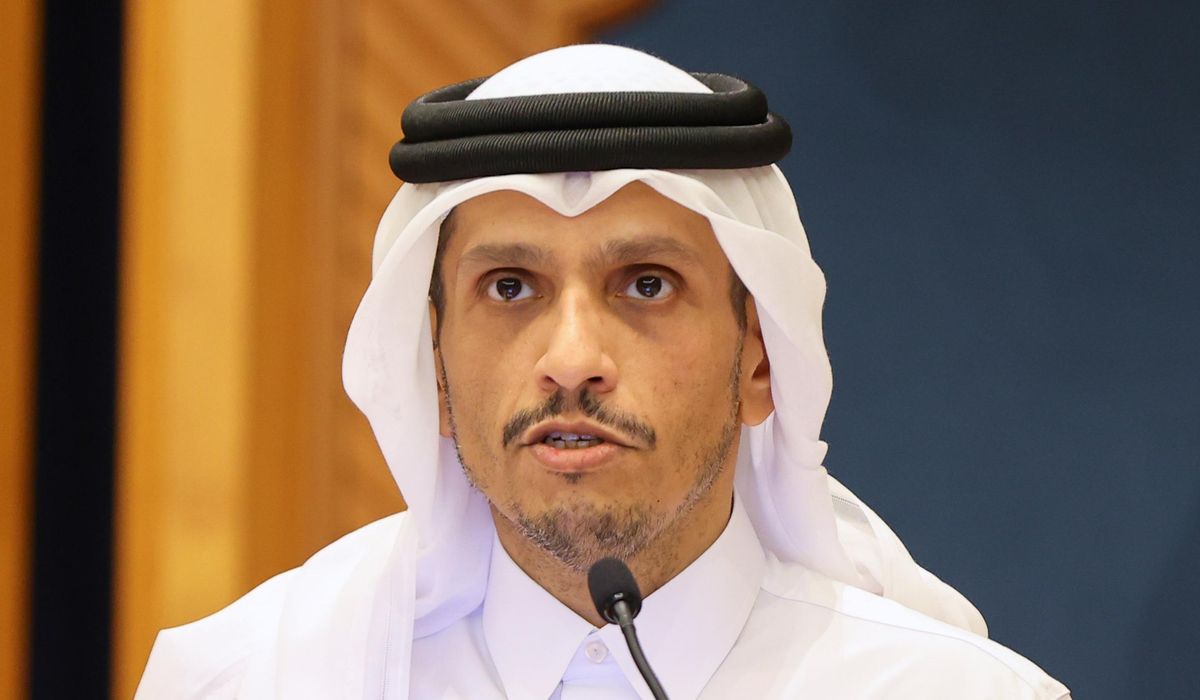
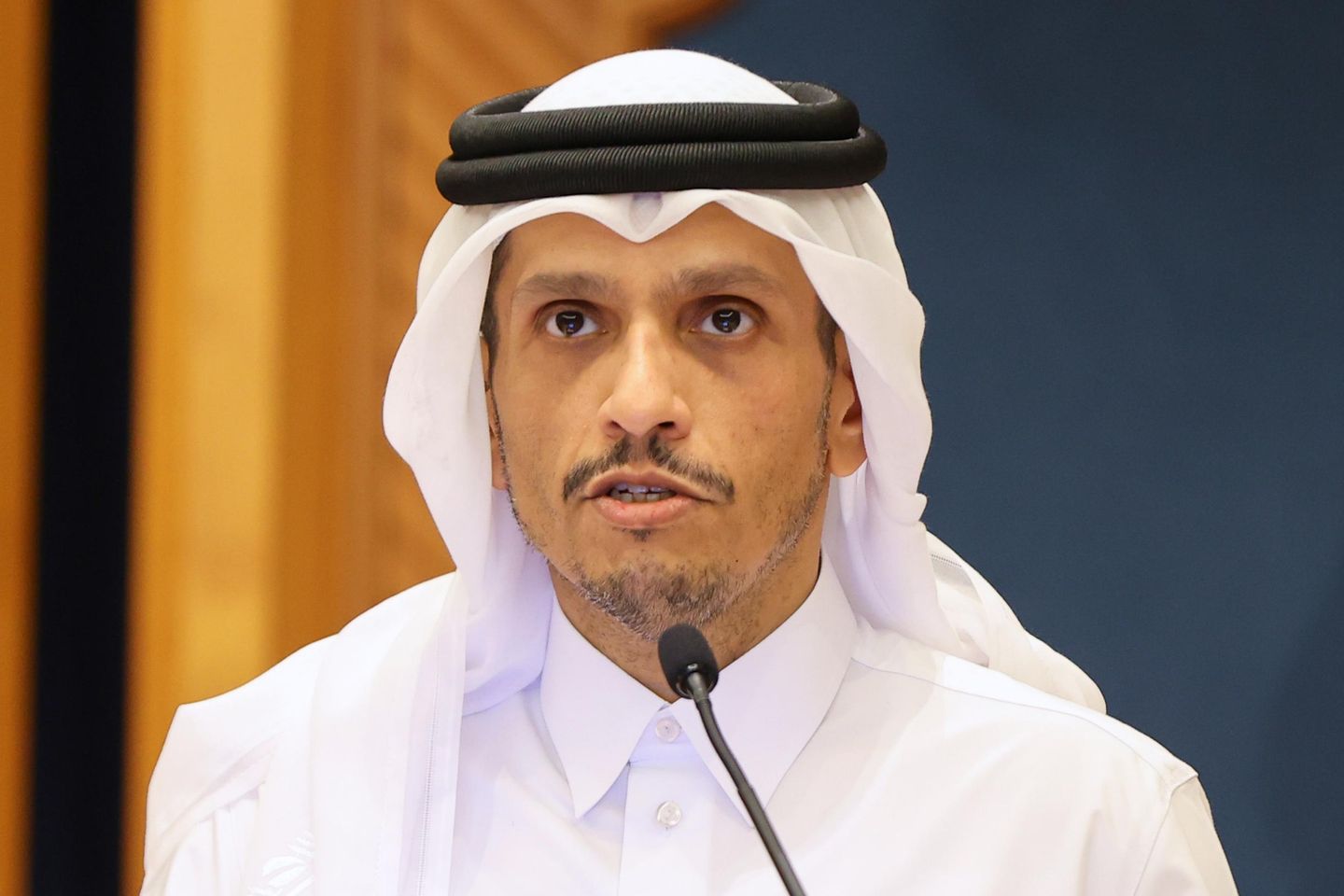
Qatar’s Prime Minister Sheikh Mohammed bin Abdulrahman Al Thani put it plainly: “We cannot mediate if we are turned into a party to the conflict. Mediation requires trust — especially from partners who rely on us.”
The tension at the forum was unmistakable.
The Trump administration offers the “G3” — Saudi Arabia, the UAE, and Qatar — partnership built on burden-sharing and mutual respect. But Gulf officials want evidence that as Washington steps back, it grasps the region they’re managing: one where Iran struck Al Udeid Air Base in June, where Israel struck central Doha in September and where mediation has become a high-risk proposition.
A day before the forum began, Prince Turki al-Faisal delivered what Gulf officials had been saying privately for months.
Speaking at the Milken Institute’s Middle East and Africa Summit in Abu Dhabi, United Arab Emirates, on Friday, the former Saudi intelligence chief was asked which poses a greater threat to regional stability: Iran or Israel.
“For the moment, definitely it is Israel,” he said, pointing to daily strikes on Syria, continued Gaza and West Bank operations, and Lebanon ceasefire violations. “By bombing Syria almost on a daily basis, continuing to bomb Palestinians in Gaza or the West Bank, and also in Lebanon where there’s supposed to be a ceasefire, they are hardly a harbinger of peace in our part of the world.”
The comment marked a shift from whispered concern to open statement. Gulf governments need Washington to recognize its old assumptions about regional threats no longer match reality.
Ali Bakir, a senior fellow at the Atlantic Council’s Scowcroft Middle East Security Initiative, told The Washington Times that Gulf leaders increasingly conclude Israel “behaves as a partner that expects concessions but offers none in return; it seeks political support, normalization, and strategic acceptance while showing little willingness to adjust its own policies to support regional stability.”
“That asymmetry — combined with a leadership that treats military escalation as a routine tool — has made Israel, in Gulf eyes, an actor whose current policies are at least as destabilizing as Iran’s, and in some ways more unpredictable,” Mr. Bakir said.
Qatar’s prime minister explained the country’s purpose in hosting groups like Hamas and the Taliban despite Western criticism.
“If we don’t keep open channels with them, then none of those conflicts can be solved,” Qatar’s prime minister told journalist Tucker Carlson at the forum.
Opening Hamas’ office in Qatar in 2012 “came at the request of the U.S.” and was used “only for communication and to facilitate ceasefires and aid to Gaza,” he said. He pointed to the 2020 Doha Accord that ended America’s longest modern war and numerous Israel-Hamas ceasefires.
“At the end of the day, Qatar provides a platform, provides the forum for parties to talk,” he said. “It doesn’t mean that we are taking one side or the other.”
Mr. Carlson pressed on the September Israeli strike: Why did Israel bomb Qatar when both Israel and the United States had asked Qatar to host Hamas for mediation?
The prime minister responded that “the concept of mediation is that it is a safe place for the two parties” and called having a mediator bombed by one party “unprecedented.”
He warned the current Gaza ceasefire remains fragile. “We are at a critical moment. What we have done is a pause, we cannot consider it yet a ceasefire.”
According to Gaza authorities, Israeli forces have violated the ceasefire more than 590 times since it took effect in October, killing at least 366 Palestinians.
“A ceasefire cannot be completed unless there is a full withdrawal of the Israeli forces, there is stability back in Gaza, and people can go in and out, which is not the case today,” Sheikh Mohammed said.
Qatar fits the national security strategy’s framework: it hosts the largest U.S. military installation in the Middle East, facilitates Gaza negotiations Washington needs and maintains channels with actors the United States won’t talk to directly.
But this year Qatar has absorbed Iran’s June 23 strike on Al Udeid and Israel’s Sept. 9 strike targeting Hamas negotiators discussing a U.S. ceasefire proposal.
The question hanging over the forum: Does burden-sharing account for partners who enable American policy while Washington reduces its footprint?
Saudi Foreign Minister Faisal bin Farhan reinforced the broader point with his own warning about normalization with Israel: Riyadh’s security concerns must be addressed fully, not selectively.
“Security cannot be one-dimensional,” he said. “Our threats are multiple and simultaneous.”
The statement marked the clearest public articulation of what the Kingdom has been communicating privately: normalization with Israel increases Saudi vulnerability unless the United States provides concrete security assurances that apply across the threat spectrum — not just on Iran.
Crown Prince Mohammed bin Salman traveled to Washington last month, pushing for defense commitments the Biden administration wouldn’t sign. The Trump administration’s national security strategy signals that alliances will be “more transactional” with less expectation of open-ended military guarantees.
Saudi officials want to know: Does that partnership include the security architecture necessary to manage threats from multiple directions? Or does burden-sharing mean Riyadh is expected to hedge on its own?
The new strategy commits the U.S. to ensuring Gulf energy supplies don’t “fall into the hands of an outright enemy” and maintaining Israeli security. What it doesn’t commit to: defending Gulf states from all external threats — only those directly threatening American interests.
That leaves strategic ambiguity on threats from Israel, exposing the Kingdom precisely when it’s being asked to normalize relations.
Ilan Zalayat, a researcher at Tel Aviv University’s Institute for National Security Studies, told The Washington Times that Israeli concerns about the burden-sharing model include Gulf states receiving advanced weapons like F-35s.
But he said the opportunity is “cooperation with Saudi Arabia and the UAE against Iran and its axis. Israel’s recently demonstrated technology and intelligence capabilities can compensate for policy differences.”
The Atlantic Council hosted a Doha Forum panel on Mr. Trump’s national security strategy where competing assessments emerged.
Victoria Coates of The Heritage Foundation argued the Middle East is “in a very different place,” pointing to Iran’s weaknesses, [Bashar] Assad’s fall, and Trump’s September U.N. diplomacy. U.S. interests are shifting to “economic — energy, fuel, technology,” she said.
David Schenker of the Washington Institute pushed back: the strategy is “more aspirational than reflective of reality.” The administration “has not yet translated military and battlefield gains into political gains.”
He cited resource constraints: “You have five or six people at the senior level and a State Department that has been diminished.”
Analysts at think tanks like the America First Policy Institute have offered a different assessment, arguing the administration has successfully shifted regional dynamics by forcing partners to choose between genuine mediation and proxy enablement. They cite Qatar’s increased pressure on Hamas as evidence the approach is working.
Abdulaziz Alghashian, a Saudi political scientist, offered the panel’s key intervention. The crown prince’s November Washington visit succeeded, he said, precisely because both sides had “a much better understanding of expectations — and also an understanding of the limits of what could be offered, and what could not.”
He described the current moment as a “Saudi-first” approach overlapping with an “America-first” approach.
“Does this mean we are drifting toward someone else? No. It means there is even more reason to diversify — but in a way that is not zero-sum with the United States.”
The Saudi-Iranian rapprochement illustrated this, he said. When the Gaza war began, “Riyadh focused on maintaining a line of communication with both Tehran and Washington, and saying: ’We are not going to be a proxy or an extension of anyone else here.’ That shows a good reading of the situation and proactive diplomacy.
“We’re not looking to replace the United States,” Mr. Alghashian said. “We’re looking to ensure that when we take on more agency and more responsibility for our own security, it happens within a partnership that is honest about limits and commitments.”
What the Kingdom can’t accept, he said, is a framework that collapses every few years or a security architecture built on unclear expectations.
“That requires better infrastructure, better information flows, better clarity. It requires a vocabulary that doesn’t mislead either side about what is actually on offer.”
U.S. Ambassador to NATO Matthew Whitaker made explicit what the strategy implies. “The United States cannot be the world’s policeman,” he said. “We cannot be this rapid deployed force that goes everywhere to settle every conflict.”
The U.S. would depend more on regional allies like Qatar to “do some of the heavy lifting,” he said, calling Qatar “probably one of our best allies outside of NATO” that can be “a net security provider.”
“We’re looking for our allies to develop themselves, to be interoperable with the US…so that we don’t have to have aircraft carriers and battleships cruising everywhere at all times.”
Donald Trump Jr., speaking at the Doha Forum, reinforced the message. “The American public has no appetite for writing blank checks for Ukraine or the EU,” said the president’s eldest son. The Ukraine conflict isn’t “even a top 10 issue for Republicans.”
He warned against “defaulting to the old ways of America’s gonna be the big idiot with a checkbook — that’s not gonna happen.”
In Doha, other Gulf officials echoed the Saudi line. Bahrain’s foreign minister said diversification shouldn’t be mistaken for “geopolitical realignment.” The UAE minister of state for foreign affairs warned the region “pays the price when global powers change their posture without warning.”
The national security strategy explicitly signals that the United States will prioritize economic, technological, and geopolitical competition with China over a permanent Middle East force posture. It views the region as a place for selective engagement, not continuous management.
That framework pushes Gulf states toward exactly what Washington claims to be concerned about: deeper ties with China on energy, technology, and infrastructure.
Gulf governments aren’t hedging because they want distance from the United States. They’re hedging because the national security strategy has formalized what they’ve experienced: American commitment has become conditional and unpredictable.
That unpredictability — combined with Israel’s expanding operations and Iran’s increasingly direct actions—has created the worst environment for states whose stability depends on balancing among powerful actors.
Mr. Bakir argued the burden-sharing doctrine “can only succeed if Washington acknowledges that Gulf states prioritize security in terms of regional stability, economic continuity, and political predictability, rather than solely military capability.”
Gulf governments, he said, “increasingly perceive Israeli actions as a catalyst for escalation that jeopardizes their economic agendas and domestic legitimacy.”
They need Washington to recognize that the new doctrine’s emphasis on burden-sharing and transactional alliances can’t work if Gulf states are expected to manage regional security while facing threats from multiple directions without clear American backing.
Mr. Alghashian offered a line that diplomats from Qatar, Oman and Kuwait quoted repeatedly in private conversations afterward.
Saudi Arabia doesn’t expect the United States to carry its burdens, he said. It expects Washington to understand the cost of asking the Kingdom — or any Gulf partner — to shoulder more responsibility without adequate support.
“We are ready to do our part,” Mr. Alghashian said. “But we need clarity. And we need commitments that match the reality we are living in.”