

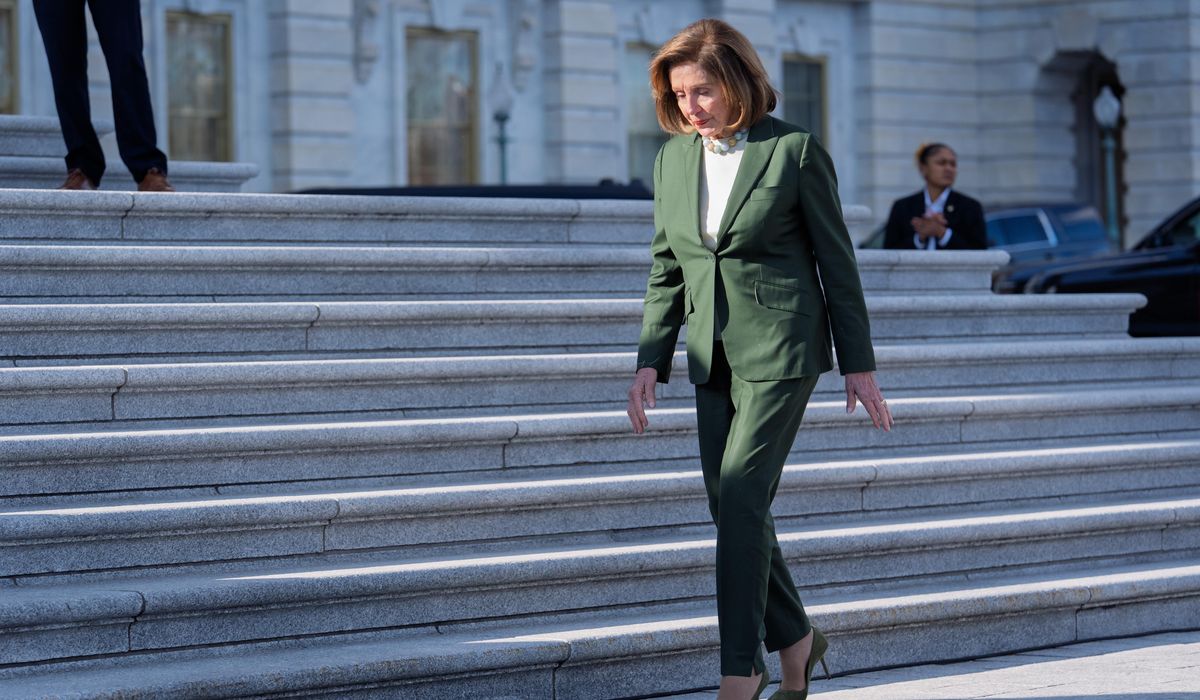
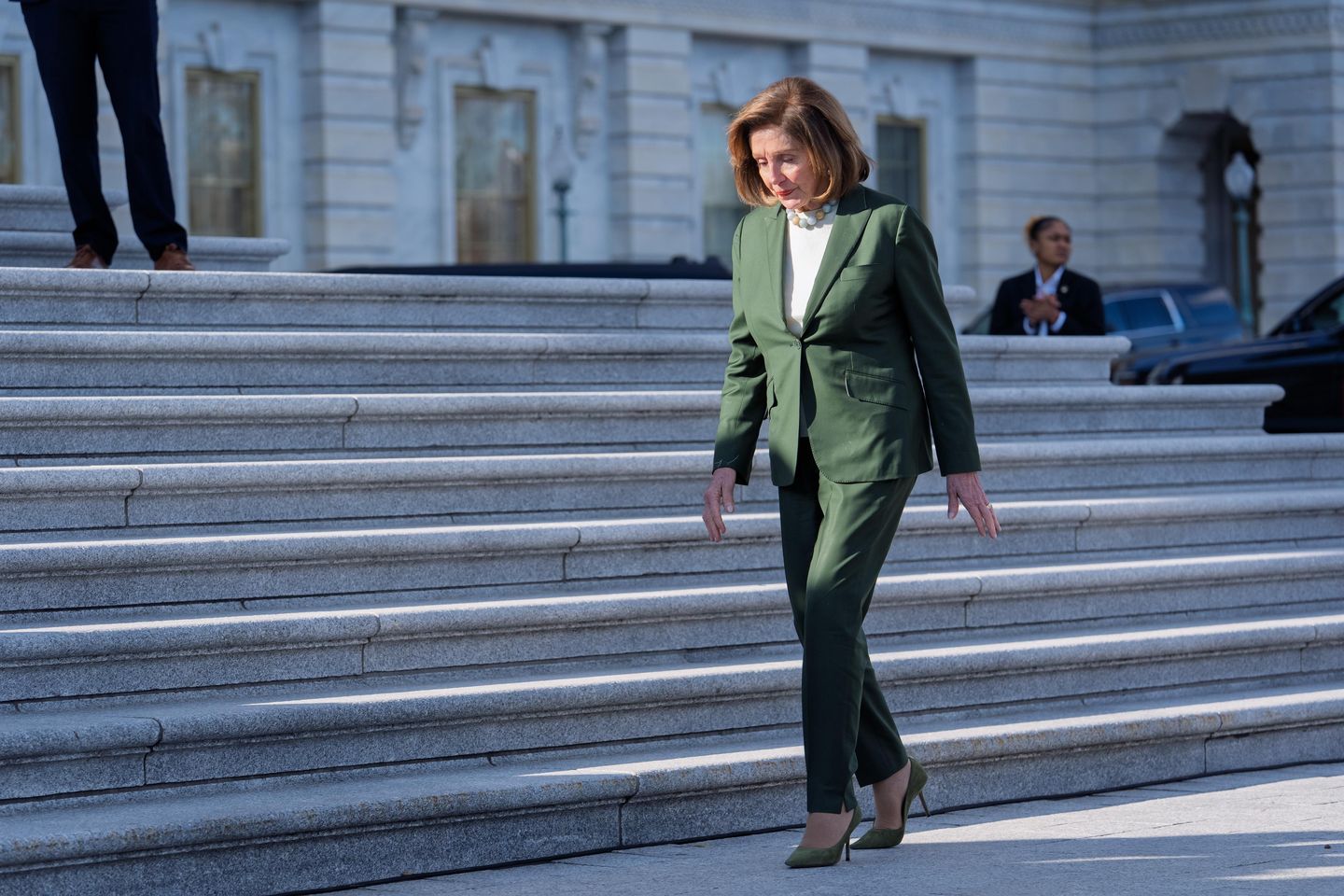
A federal appeals court said Thursday it will revisit the legality of former House Speaker Nancy Pelosi’s COVID-era proxy voting system and erased a ruling that had upheld the scheme as constitutional.
The full slate of judges from the 5th U.S. Circuit Court of Appeals will rehear the case.
The judges also set aside last year’s ruling by a three-judge panel of the court that had backed Mrs. Pelosi’s designated voter idea, which allowed lawmakers to cast votes on the House floor for colleagues who were absent.
She said the plan allowed lawmakers who either were quarantined during the pandemic or who feared catching the virus from contact with colleagues on the House floor to cast votes on business.
Critics said important bills were passed without an actual quorum of lawmakers present.
After a crucial spending bill was passed using proxy voting in late 2022, Texas sued and won in district court, but the three-judge panel overturned that decision in a 2-1 decision.
Circuit Court Judge James E. Graves Jr. said Mrs. Pelosi’s plan wasn’t specifically barred by the Constitution and amounted to no harm, no foul.
“The House’s proxy-voting rule did not violate anyone’s fundamental rights,” Judge Graves, an Obama appointee, wrote in the decision last summer. “There is a reasonable relationship between the rule and the result it seeks — majoritarian rule. And the constitutional text, history, and tradition indicate that the Quorum Clause contains no physical-presence requirement that the House’s rule could have flouted.”
Judge Cory Wilson dissented from that 2025 ruling.
“Because Congress is not free to define the Constitution’s quorum requirement out of existence, I would hold, as the district court did in its trenchant and thorough analysis, that the House acted outside its authority in passing the act and that the act is therefore constitutionally infirm,” wrote Judge Wilson, a Trump appointee.
The spending bill in question passed on a 225-201 vote.
But records show that 228 of those lawmakers — the majority — voted by proxy, meaning just 198 lawmakers were actually present.
Normally that would be short of the quorum required to do business, but Mrs. Pelosi’s rules, which Democrats powered through as a new rule during the pandemic, waived that physical presence requirement.
The Supreme Court has never addressed whether physical presence is required for a congressional quorum.
The rule led to some strange business.
In early 2021, more than 50 House members used proxy votes to impeach President Trump after the events of Jan. 6.
Some lawmakers also used proxy-voting for other than pandemic concerns. One Democrat was accused of using proxy-voting so he could attend a friend’s wedding in France.
Texas, in its lawsuit, objected to specific parts of the spending bill that enshrined the Pregnant Workers Protection Act and language governing the Department of Homeland Security’s ability to catch and release illegal immigrants at the border.
House Republicans had also challenged Mrs. Pelosi’s proxy-voting scheme in a 2020 lawsuit.
U.S. District Judge Raul Contreras, an Obama appointee, shot that down, saying it was beyond courts’ jurisdiction because Congress is free to make internal rules governing its operations. That includes how they cast their votes.
The U.S. Circuit Court of Appeals in the District of Columbia affirmed his ruling.
“That conduct thus falls comfortably within the immunity afforded by the Speech or Debate Clause,” Circuit Court Judge Sri Srinivasan, an Obama appointee, wrote in a 2022 ruling, which the Supreme Court declined to review.