
Has Donald Trump made Iran a deal it can’t refuse? Or will Ahmad Vahidi try playing Michael Corleone from the sequel not just to The Godfather but also to Barack Obama’s JCPOA?
Thus far, the Iranian regime has been mainly Fredo, with a dash of Sonny. That, however, argues against Trump’s optimism about the regime’s ability to recognize defeat and Vahidi’s desire to actually make a deal. Nonetheless, Trump keeps insisting that Vahidi et al will have no choice but to accept his latest offer:
U.S. President Donald Trump, who has repeatedly played up the prospect of a breakthrough since the war began on February 28 with U.S.-Israeli strikes on Iran, struck an optimistic tone.
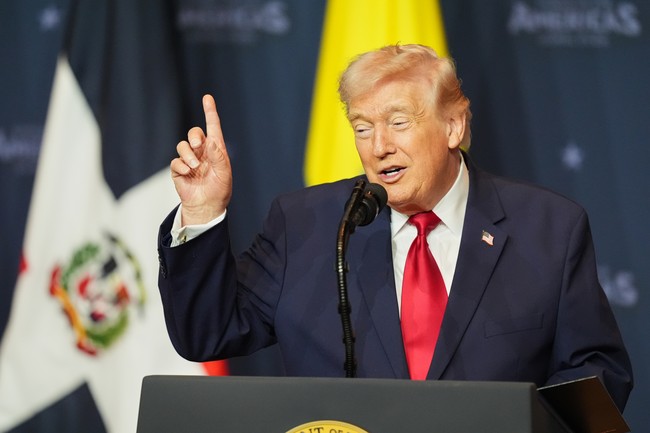
“They want to make a deal… it’s very possible,” he told reporters at the White House on Wednesday, adding later that “it’ll be over quickly.”
The proposal would formally end the conflict in which full-scale warfare was paused by a ceasefire announced on April 7. But it leaves unresolved key U.S. demands that Iran suspend its nuclear programme and reopen the Strait of Hormuz, the sources said.
What did Trump propose? Reuters reports that it doesn’t mention any of the security issues that prompted the war in the first place:
The sources said the memorandum did not mention several key demands Washington has made in the past, which Iran has rejected, such as the restrictions on Iran’s missile programme and an end to its support for proxy militias in the Middle East, including Hezbollah.
The sources also made no mention of Iran’s existing stockpile of more than 400 kg (900 pounds) of near-weapons-grade uranium — one of Washington’s central concerns.
Well, then, what does the deal include? If it’s just a straight-up swap to fully reopen the Strait of Hormuz, then Iran would take that deal and stall everything else. That’s a recipe for turning Operation Epic Fury into Operation Dyspeptic Waste – not a loss in terms of a punitive expedition, but a colossal missed opportunity.
Last night, though, the Wall Street Journal editorial board unveiled the actual contents of the proposed “framework.” It’s a much tougher set of demands than what Reuters suggests, very much including the nuclear-weapons program, while leaving other security issues to later negotiation. This makes a lot more sense from the US perspective, but that has implications for Vahidi:
From our discussions with senior officials, here’s where U.S. red lines stand in the talks:
The U.S. says it needs Iran’s attestation that it doesn’t seek nuclear weapons; the dismantlement of the Fordow, Natanz and Isfahan facilities; a ban on underground nuclear work; and on-demand inspections with penalties for violations. The U.S. seeks a 20-year moratorium on Iranian nuclear enrichment and demands the handover of all enriched nuclear material.
Iran would have to reopen Hormuz—gradually, as the U.S. relaxes its blockade, and then fully with the final deal. Most U.S. sanctions relief would be tied to Iran’s performance of the deal, not merely its signing, though some assets could be unfrozen to begin.
This makes more sense as an American proposal. Trump has made clear all along that the nuclear issue was a “red line” for the US, and Trump has repeatedly promised that the war would end with the US in possession of the “nuclear dust.” Trump set those expectations for the outcome of the war, and a failure to achieve those objectives will cast a pall over any other objectives achieved in this conflict. He managed expectations of regime change more carefully than Trump has with the nuclear issue; as late as yesterday, he told a group of visiting children that Iran will never have a nuclear bomb thanks to his intervention.
However, if this is the proposal, then it’s very unclear why Trump is optimistic about prospects for Vahidi’s agreement to it. Yes, the blockade is strangling the regime, and yes, it’s also destabilizing the economy and the IRGC’s control of the populace. However, Vahidi went this long without conceding the nuclear issue, and he’s still threatening traffic through the Strait of Hormuz to keep his nuclear ambitions. Vahidi has several redlines that he refuses to concede, and the nuclear weapons development program is the reddest of his redlines. The reason is that the regime’s Twelfth Imam cult needs nuclear weapons to immanentize their apocalyptic eschaton and give the Iranian regime global control through divine intervention.
This is why Vahidi and his cult – whether the mullahs are around or not – cannot be trusted in negotiations. The Iranian regime has never negotiated in good faith, and has never considered itself bound by its own agreements. Its proxies Hamas and Hezbollah have operated in that manner for decades as well. Without absolute verification mechanisms in place and a willingness to use overwhelming force and destruction for violations, no deal with the IRGC will be worth the paper on which it’s printed.
On top of that, no president than Trump has ever been willing to use overwhelming force against Iran, and Vahidi knows it. Trump might get a deal from Vahidi only to see him stall for the next three years on compliance, betting that the next president will back off rather than run the political risk of enforcing any agreement. It’s still not clear whether Vahidi can emerge looking more like Michael than Fredo or Sonny from this standoff, but Trump had the opportunity to settle all family business with Iran – and he may regret wanting to cut a deal more than ensuring a complete defeat for the core of radical-Islamist ambitions in the region.
KT McFarland nails this point with Larry O’Connor this morning on Larry’s new national Salem Radio morning show. We’ve signed agreements with Iran and its proxies for decades. The issue is that they never stick to the agreements. If you loved the Hamas Hokey Pokey, you’ll adore the Tehran Two-Step. At some point, we have to learn this lesson. Let’s hope we learn it before the inevitable mushroom cloud.
Can you even trust a deal anymore?@LarryOConnor and KT McFarland break down the Iran negotiations — and why today’s diplomacy looks nothing like the secret back-channel deals of the past.
McFarland says the real issue isn’t signing an agreement… it’s whether it can actually… pic.twitter.com/qL6Z348C4E
— Salem News Channel (@WatchSalemNews) May 7, 2026
Editor’s Note: For decades, former presidents have been all talk and no action. Now, Donald Trump is eliminating the threat from Iran once and for all.
Help us report the truth about the Trump administration’s decisive actions to keep Americans safe and bring peace to the world. Join HotAir VIP and use promo code FIGHT to get 60% off your VIP membership.