
A long-established factory that’s been a fixture for decades doesn’t fall all at once. It starts with a sound most people ignore: a loose bolt, a grinding gear, or a rhythm that feels just a little off.
But the line still moves, the product still comes out, yet something underneath isn’t quite right anymore. People hear it; however, the question isn’t whether something’s wrong; the question is what to do about it.
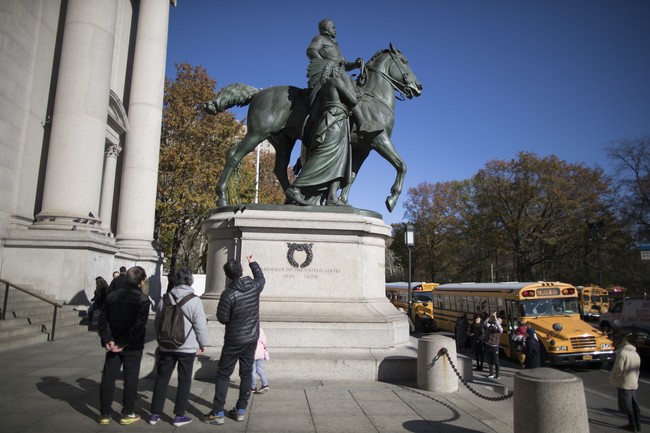
President Theodore Roosevelt, or as they called him, TR, walked into that kind of moment with sleeves rolled up and a wrench in his hand; not waiting for consensus, he just moved. He believed the system still deserved to function, and he forced it to do so.
TR chased leadership, shaped it, and bent it to his will. He worked with such a frenetic pace that left little room for hesitation, writing, governing, traveling, and speaking with a constant urgency that matched the era he lived in. He understood attention before modern politics turned it into currency.
Newspapers followed him because he gave them something to follow. TR anticipated the crowd and stayed ahead of it, not through calculation alone, but through instinct and effort.
President Donald Trump stepped into a different century, yet the same current runs through him. The machinery changed, and the speed increased, but the instinct remained.
He doesn’t wait for coverage; he creates it. He doesn’t adjust to the cycle; he disrupts it, working with a relentless pace that mirrors Roosevelt in a modern form, staying in constant motion through communication, appearances, and direct engagement.
Trump recognized early that attention forms the battlefield itself, and he refused to give it up. Like TR, he understood the crowd before the crowd could fully define him.
Both men came from New York and rose by challenging the leaders inside their party by projecting toughness and building loyalty through bold, visible action, and both fought with the press while still using it to shape the narrative in their favor.
TR used newspapers and the bully pulpit to press his agenda forward. Trump turned social media into a direct line that bypassed traditional filters. Each man thrived in conflict and refused to step back when pressure built.
They didn’t manage the moment; they seized it.
But the similarities only carry the story so far. The real divide appears in how each man answered the same underlying problem.
Roosevelt heard the grinding inside the system and went to work fixing it, believing the structure could still hold if somebody strong enough demanded more from it. TR challenged concentrated power, pushed back against abuse, and forced the machinery to work the way it was meant to. He didn’t reject the system; he disciplined it, acting like a foreman who believed the factory could still run as long as someone took responsibility for keeping it in line.
Trump rose in a moment when many people no longer believed the system worked for them at all. He didn’t begin with repair; he began with doubt, questioning whether the machinery had been working properly for a long time, or whether it had been tilted in ways most people could no longer ignore. That shift changes everything about how leadership works, moving the focus away from fixing parts and toward questioning the entire structure.
Both men understood that hesitation invites failure, moving quickly, speaking directly, and keeping themselves at the center of the moment.
Both recognized that control doesn’t come from waiting; it comes from acting. Yet one acted to steady the system, while the other gained strength from those who believe the system itself no longer deserves that kind of confidence.
That tension hasn’t disappeared; it shows up whenever people begin to sense that something underneath the surface isn’t working the way it once did. Some look for a leader who tightens the bolts and restores order, while others look for somebody willing to challenge whether the entire operation still makes sense.
And that brings us back to the factory floor.
Roosevelt heard the noise and got to work keeping the line running, believing the system could still produce something strong if it was handled with discipline and force.
Trump hears the same kind of noise echoing through a different era and asks a harder question, not just reaching for the wrench. He asks whether the machine itself has outlived its purpose.
The belts are still moving, the gears turning, and the sound hasn’t disappeared.
What remains is the debate over what to do about it, and that argument really never ended.
The story doesn’t end on the factory floor, and it doesn’t stop with Roosevelt or Trump; there’s a deeper pattern that keeps resurfacing whenever people start questioning who really holds control and whether the system still answers to them. If you want the full picture, join us as a VIP member and get 60% off with promo code FIGHT.