
Four people — two from the United States and two from Mexico — died in a car crash in the Mexican state of Chihuahua over the weekend. Several media outlets are now reporting that they weren’t just tourists out for a joyride.
The two from the U.S. were reportedly embassy employees working for the CIA, acting in advisory roles for counternarcotics operations. The Mexicans were from Chihuahua’s State Investigation Agency (AEI): Director Pedro Román Oseguera Cervantes and Officer Manuel Genaro Méndez Montes.
According to the Washington Post:
The four died as they were returning from meeting with Mexican officials in the aftermath of the operation to dismantle a clandestine drug lab in a remote area. Chihuahua’s attorney general, César Jáuregui Moreno, told Mexico’s El Universal newspaper that the Americans did not directly participate in the Mexican raid on the lab, which he called ‘perhaps one of the largest ever located.’Mexican officials said the car skidded off the road, fell down a ravine and exploded.
Ronald Johnson, the United States’ ambassador to Mexico, posted his condolences on X and confirmed that they were embassy employees. Of course, the CIA has confirmed nothing.
We are deeply saddened by the tragic loss of two U.S. Embassy personnel, the Director of Chihuahua’s State Investigation Agency (AEI), and an AEI officer in this accident. We honor their dedication and tireless efforts to confront one of the greatest challenges of our time. Our…
— Embajador Ronald Johnson (@USAmbMex) April 19, 2026
While there is some social media chatter and speculation about cartels being involved or doing it to retaliate, officials believe the cause was far less mysterious. While investigations are still underway, other members of the five-car convoy that was traveling on the mountainous — and notably dangerous — Chihuahua–Ciudad Juárez Highway at 2 a.m. say there was no sign of foul play. No cartels have claimed responsibility for the accident, either.
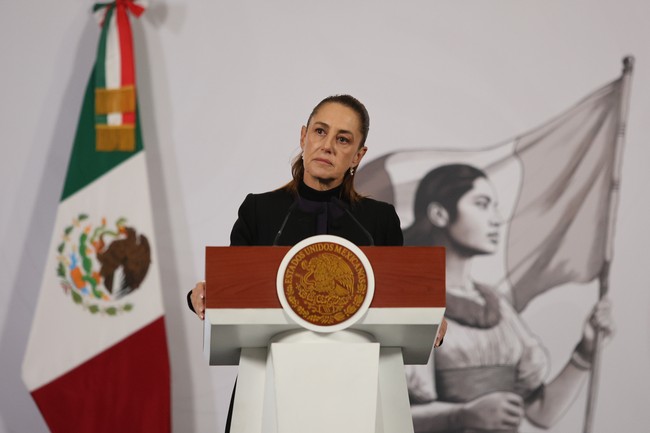
What makes this story somewhat more interesting is that Mexico’s narco-president, Claudia Sheinbaum, says she is “unaware of any direct collaboration between the state of Chihuahua and personnel from the U.S. Embassy in Mexico.”
“The relationship is federal, not state,” she added. “They must have authorization from the federal government for this collaboration, which necessarily takes place at the state level, as established by the Constitution.”
In other words, she believes that officials in Chihuahua basically went behind her back, as collaboration with foreign agents must be approved by her government. For their part, Chihuahuan officials say that the U.S. agents were only advising, and that the Mexican officials were the ones who performed the actual work.
Even if they did go behind her back, who can blame them? Chihuahua, which sits along the borders of New Mexico and Texas, is Mexico’s largest state. It’s also one of the country’s most dangerous. While the number of homicides declined slightly in 2025, its monthly homicide rate typically ranks second or third amongst all Mexican states. Much of the violence there is due to cartel activity, primarily from the Sinaloa and Jalisco New Generation Cartels (CJNG).
The Donald Trump administration wants to do something about this and has been trying for the past year, applying pressure and issuing sanctions against politicians with ties to drug trafficking. As the Washington Post reports, “Under CIA Director John Ratcliffe, the CIA has taken a more aggressive role in counternarcotics activity.” It was our CIA intelligence that helped lead Mexican authorities to Nemesio Rubén Oseguera Cervantes, the drug kingpin known as “El Mencho” in February. Or should I say formerly known — he’s dead now, thanks to that.
Last month, at the Shield of the Americas summit, Trump criticized Sheinbaum, claiming he’s offered her plenty of help to “eradicate” the cartels, but she almost always refuses. During his speech, he called Mexico the “epicenter” of the cartel violence that plagues our entire region. When this topic comes up, Sheinbaum starts fussing about her sovereignty and says she’s open to things like intelligence sharing but not direct intervention.
Of course, she’s also a big fan of her predecessor’s “Hugs, not bullets” (Abrazos, no balazos) security policy and is somewhat obsessively worried about the rights of the cartels. And most people recognize that her Morena Party is largely involved with the cartels, so she’s not going to do much of anything about it anyway.
In recent months, the Mexican people have held protests, demanding the federal government do more to protect them from organized crime. Some of these were sparked by the murder of a popular Mexican mayor in November. He was trying to clean up his region and begged Sheinbaum for help, often knowingly putting his own life at risk. He was assassinated during a Day of the Dead celebration.
While Sheinbaum turns a blind eye, perhaps state and local leaders are so fed up that they’re stepping up to do what she refuses. It certainly sounds like it.
Related: From Drug Busts to Deportations: How One Ally Is Helping Trump Secure Our Region
Want to support conservative media? You can do so by becoming a PJ Media VIP member. It’s less than $20 for the entire year, and you get some cool perks, too. We can’t wait to have you!