
About six weeks after the U.S. launched an air campaign aimed at destroying Iran’s ballistic missile capabilities, naval power and defense industrial base, the Navy on Monday began a blockade to restrict vessels entering or leaving the country’s ports.
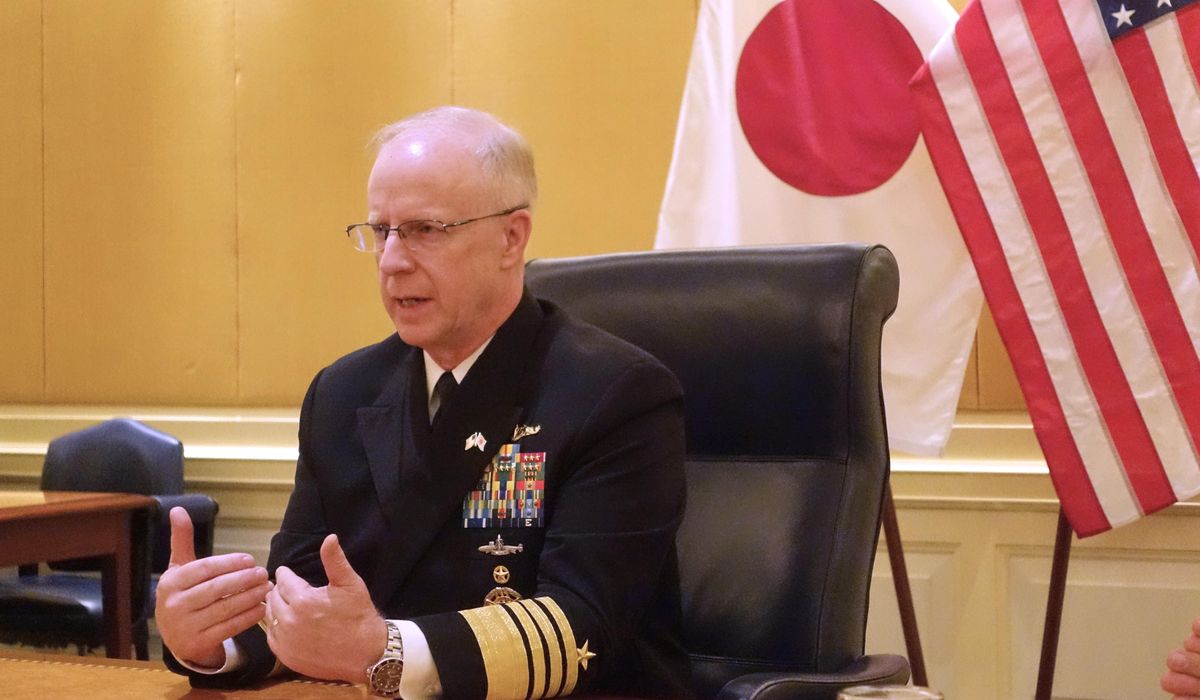
Adm. Daryl Caudle, the chief of Naval Operations, said Adm. Brad Coopoer, his four-star colleague at U.S. Central Command, will have his work cut out for him, essentially shutting down Iran’s ports and clearing any sea mines that Tehran sent into the Persian Gulf.
“Striking forces and scouting forces are always going to be part of the Navy’s core attributes,” Adm. Caudle said Monday at the Atlantic Council think tank. “But, if you get a specific problem, like a blockade, you have to think about this from a multidimensional problem set, and that’s a tough challenge.”
The blockade follows the collapse of high-stakes peace negotiations in Islamabad, Pakistan, over the weekend after U.S. and Iranian negotiators failed to reach a permanent deal to end Operation Epic Fury.
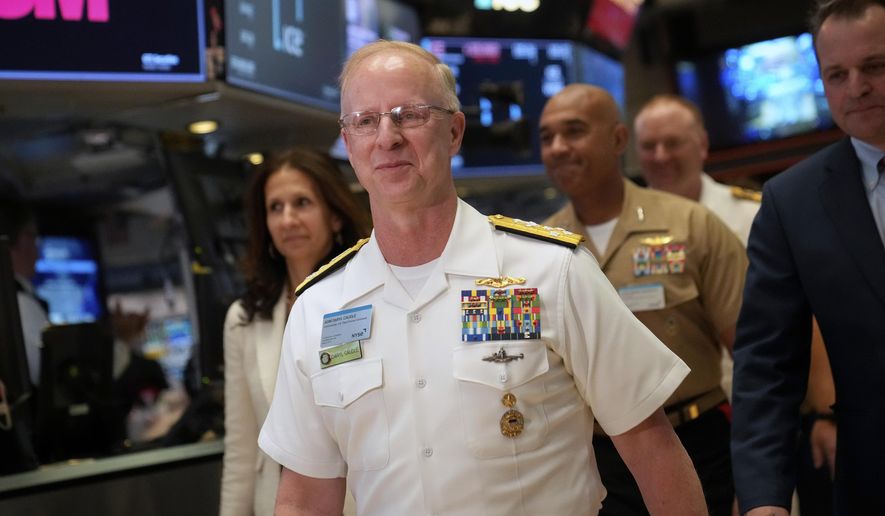
Adm. Daryl Caudle, commander of the …
more >
“Iran’s navy is lying at the bottom of the sea — completely obliterated. What we have not hit are their small number of ‘fast attack ships,’ because we do not consider them much of a threat,” President Trump wrote on Truth Social. “If any of these ships come anywhere close to our blockade, they will be immediately eliminated.”
Adm. Caudle said he didn’t want to get ahead of Adm. Cooper and his position as the U.S. combatant commander in the Middle East but was willing to offer some general thoughts about the daunting task at hand.
“Are the requirements from a Navy blockade the same set of capabilities and risks going into the [Strait of Hormuz] as coming out of the strait?” Adm. Caudle said. “I think people would argue, no, those are different. Those are different problems that [Adm. Cooper is going to face,”
Commercial vessels operating in the Strait of Hormuz — even those not boxed in by the U.S.-led blockade — would tend to face more mine warfare risks than ships in the Indian Ocean and Arabian Gulf trying to get in, Adm. Caudle said.
“Mining and the threats of mines could be an asymmetric threat, so we have to keep that in mind,” he said. “Is there a contested environment that the blockade would be in? What type of defensive air capability will I need to understand?”
The refusal to participate in the U.S.-led blockade of Iranian ports has caused a serious rift between Washington and long-standing allies such as the U.K.
“What is the willingness of allies and partners to be in a coalition here? How are they going to work to do that?” Adm. Caudle said. “What are the underpinning diplomacy and agreements that would be tied to a ceasefire and help provide some assurances?”
Every decision involved in the blockade will also be impacted by a legal framework designed to ensure that U.S. forces, even in combat, stay within the bounds of the law.
“So all that is going on in the mind of the Central Command commander [Adm. Cooper] and his Navy component commander helping him understand what he can do,” Adm. Caudle said.
On April 11, Central Command began setting conditions for clearing the mines in the Strait of Hormuz with the arrival of the USS Frank E. Petersen and USS Michael Murphy.