
There has always been something regal and majestic about The Masters Tournament.
The soft, spring Georgia air, the unmistakable sound of a club striking a golf ball, the low murmur of a respectful gallery — it all blends into something closer to a tradition than a broadcast, a setting where even the quiet feels intentional and every moment carries a certain weight.
For fans, that atmosphere isn’t just background noise — it’s the point. The Masters has long stood apart precisely because it resists the urge to “evolve” into something flashier or more overproduced. It’s golf as ceremony, not spectacle, where the focus stays squarely on the course, the players, and the slow, deliberate rhythm that defines the sport at its highest level.
Which is why this year’s coverage from ESPN has struck such a nerve.
ESPN has come under immense scrutiny for its coverage of this year’s Masters, bucking tradition in favor of something… louder.
Literally no one wants this. Stop ruining The Masters. https://t.co/e1XhBjnirw
— Caleb Hull (@CalebJHull) April 9, 2026
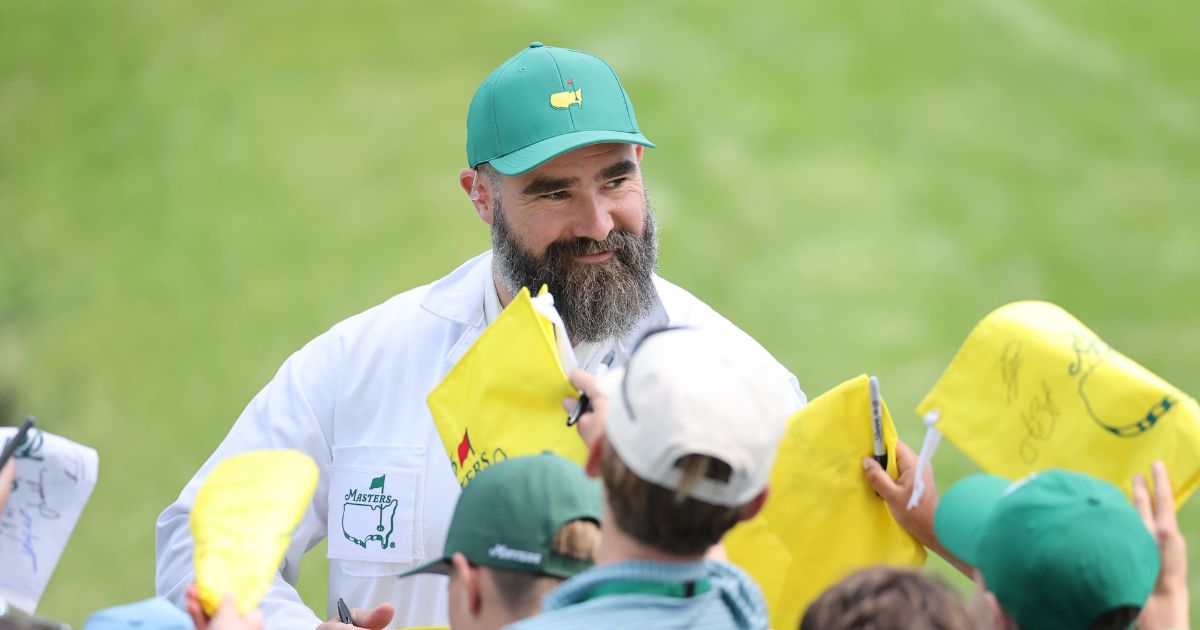
The most noticeable issue for the event was ESPN’s proliferation of especially blaring celebrities like former NFL standout Jason Kelce, comedian Kevin Hart, and the network’s own jester, Pat McAfee.
“Literally no one wants this,” one X account, sharing a particularly deafening Kelce clip, posted. “Stop ruining The Masters.”
“What an embarrassing joke,” another account posted, this one sharing a clip of Hart and his not-so-prodigious golf skills:
What an embarrassing joke https://t.co/jszfh6ZhQq
— JL (@JLas43_) April 8, 2026
A different X account summed it up rather well (and deservedly got tens of thousands of likes): “Having Pat McAfee, Jason Kelce, Bert Kreischer and Kevin Hart at The Masters is the epitome of ESPN’s cultural degradation of sports. Augusta National should be the ultimate place of dignity and reverence and these ignominious dullards debase it with their sophomorish hijinks.”
For all the viral clips and social media outrage, what’s really bothering golf purists isn’t just a few loud guests, but rather what those guests represent. The Masters Tournament has never been about chasing relevance or courting attention. It has endured precisely because it refuses to bend, because it treats tradition as a standard worth preserving.
That’s a mindset that will sound familiar to any conservative who values tradition in a culture increasingly obsessed with disruption. There was a time when institutions — whether in sports, the arts, or public life — felt a responsibility to honor what came before, to build on it rather than tear it down in pursuit of something louder, faster, or more clickable.
What’s happening now, at least in microcosm, is something different. The push to inject celebrity antics and viral energy into a setting like Augusta is ultimately about reshaping it to fit a culture that struggles to sit still, to appreciate restraint, or to find meaning in quiet excellence. The result is something more flat, less rooted, and ultimately less memorable.
And that’s why the backlash feels sharper than your typical sports media gripe. Because when even a place as fiercely protective of its identity as The Masters starts to feel the pull of that cultural drift, it raises a broader question: if this isn’t safe from it, what is?
In the end, this isn’t really about ESPN, or even about a handful of celebrities trying to have a good time on a golf course. It’s about whether institutions like The Masters will continue to stand as rare holdouts for tradition and dignity, or whether they’ll slowly be reshaped into just another piece of disposable entertainment.
Because once something that timeless starts chasing the moment, it risks losing the very thing that made it matter in the first place.

Advertise with The Western Journal and reach millions of highly engaged readers, while supporting our work. Advertise Today.