

President Trump’s efforts to cut Biden-era regulations are being eclipsed by his tariffs and other executive actions that threaten to mask the gains he’s made from cutting red tape, according to a new report.
The president can tout his success in rolling back hundreds of regulations, but it may not enough to offset new requirements from his other initiatives, the Competitive Enterprise Institute, a regulatory reform think tank, said in its annual report titled “Ten Thousand Commandments.”
Report author Clyde Wayne Crews Jr. said rulemaking under Mr. Trump in 2025 showed “extraordinary restraint relative to Biden’s record-setting years.” But he said Mr. Trump also “grew government intervention” elsewhere, including partial nationalization of some major companies.
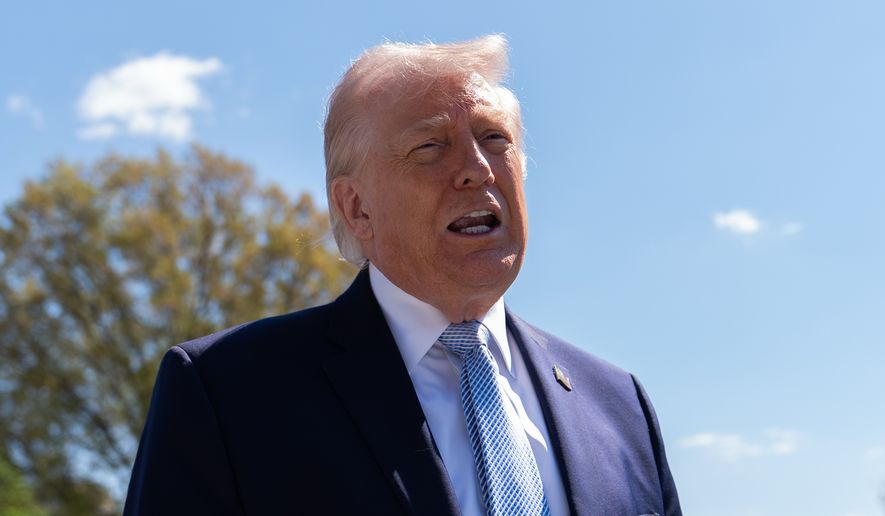
President Donald Trump speaks with reporters …
more >
The report also found that Mr. Trump’s reported annualized regulatory costs savings of about $15 billion “are offset by inflation applied to legacy economic costs.”
The Trump administration issued 646 deregulatory actions versus just 5 significant new regulatory actions, a 129-to-1 ratio, claiming $212 billion in savings for the economy.
However, just three rules account for more than 80% of the savings through rolling back regulations: the beneficial ownership reporting rule rollback, the Transportation Security Administration’s “shoe rule” [allowing airline passengers to keep on their shoes during security screening], and a Food and Drug Administration laboratory testing rule.
The bulk of the headline deregulatory number rests on a very small handful of actions, while hundreds of the other “deregulatory” entries are likely much more minor in real-world impact.
While Mr. Trump’s executive actions rolled back multiple existing regulations, his administration has also sought and imposed subsidies, tariffs and interventions that threaten to dim deregulatory gains.
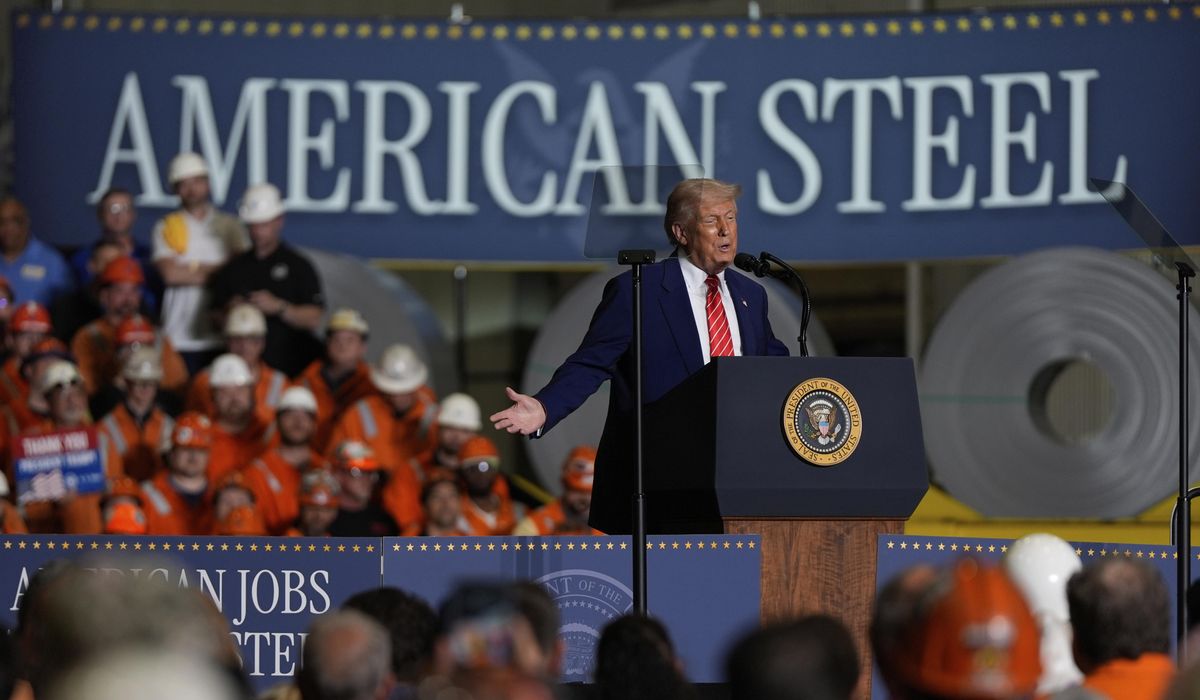
His deregulation efforts have been offset by heavy use of tariffs, executive orders, antitrust activity and partial nationalizations of companies such as Intel and U.S. Steel. Mr. Trump issued 225 executive orders in 2025 alone — more than John F. Kennedy, Gerald Ford, George H.W. Bush and Mr. Trump himself issued during their entire four-year terms.
Regulations cost the U.S. economy at least $2.1 trillion annually, a conservative estimate that translates to almost $16,000 per household.
This “hidden tax” exceeds what households spend on health care, food or transportation, while only housing costs are more, the CEI report said.
If U.S. regulation were a country, it would be the world’s 11th-largest economy, the report said.
For every law Congress passed in 2025, executive agencies issued 18 regulations. The report says this reflects a fundamental transfer of lawmaking power from elected officials to unelected bureaucracies.
But federal agencies issued only 2,441 final rules in 2025, the lowest count ever recorded, beating the Trump administration’s prior record of 2,964 in 2019.
Regulatory costs hit small businesses hardest: firms with fewer than 50 employees face per-employee regulatory costs of $50,100, while large firms are hit with $24,800. Although rules affecting small businesses fell to a record low of 599 last year, some of the removed rules are not actually eliminating ongoing costs — they’re more like administrative housekeeping.
The report calls for Congress to reclaim its constitutional role by approving major rules before they take effect, such as voting on costly agency rules before they become binding, via the proposed REINS Act.
It also asks Congress to establish a regulatory budget, create a regulatory reduction commission and create annual regulatory report cards to report on not just formal rules, but to include guidance documents.
Executive-led deregulation alone, the report said, is insufficient and vulnerable to reversal by future administrations.