

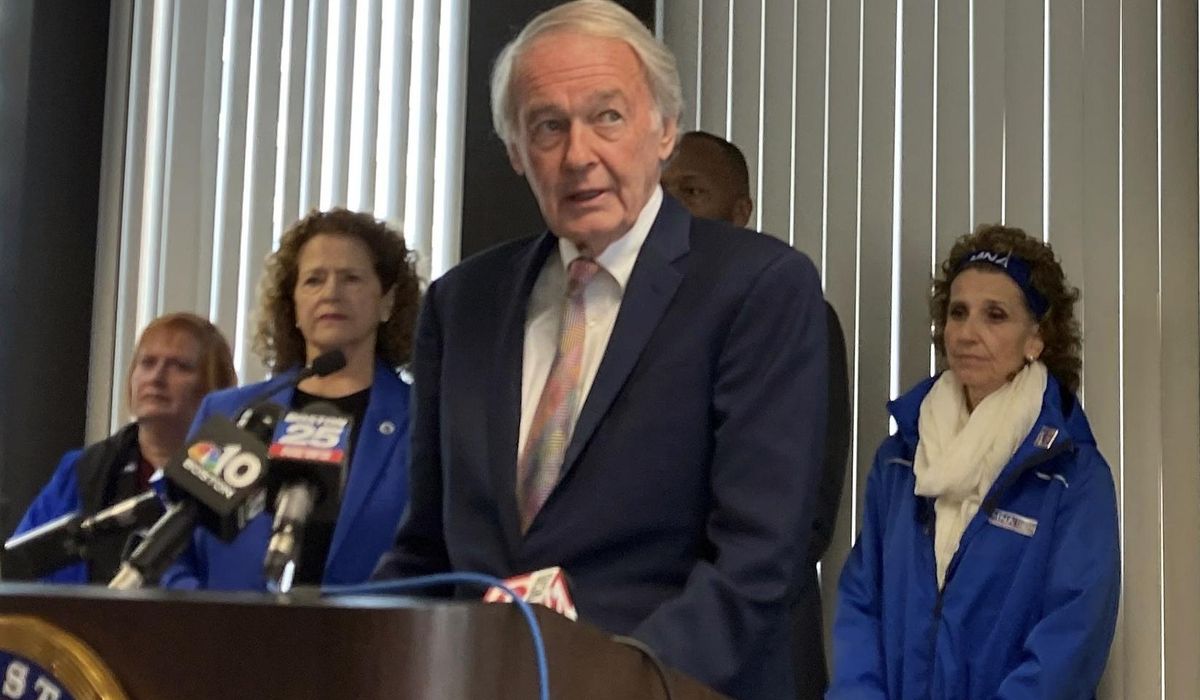

The Senate on Thursday passed a bill to expand a 1998 law that restricts the online collection, use, and disclosure of personal information of children under 13.
The Children and Teens’ Online Privacy and Protection Act, or COPPA 2.0, extends the law’s restrictions to teenagers ages 13 to 16, unless they provide consent for internet companies to collect their data.
It also adds new data minimization rules and seeks to crack down on loopholes that Big Tech may exploit to continue abusive data collection.
The bill passed by unanimous consent, without a roll-call vote.
“This bipartisan legislation represents the most significant update to our nation’s online privacy protections for young people in more than twenty-five years,” said Sen. Edward J. Markey, the Massachusetts Democrat who authored the initial law when he was a member of the House and has been trying to update it since 2011.
“Kids, families, and parents have waited far too long for Congress to pass legislation and stop Big Tech’s relentless tracking and targeting of children and teens online,” he said. “I’m ready to work with our House colleagues to enact the bipartisan, common-sense protections in COPPA 2.0 into law. We can get this done.”
House Energy and Commerce Committee Republicans on Thursday had planned to advance their own version of the bill, which senators and House Democrats oppose, but pulled it at the last minute.
Rep. Brett Guthrie, Kentucky Republican and the panel’s chairman, said committee staff have made “substantial progress” toward a bipartisan agreement on that bill and he wants to see if that comes to fruition, rather than advance the version Democrats oppose.
The committee did advance three other children’s online-safety bills, with Democrats united in opposition to two of them and most opposed to the third.
Those measures are also in conflict with the Senate’s preferred measures to protect children in the digital age, so COPPA 2.0 may stand the best chance of anything becoming law this year.