
The ugly underbelly of the Diversity, Equity and Inclusion (DEI) movement is rarely exposed in any real detail, usually because there aren’t a lot of DEI reverse-discrimination lawsuits that end up in court, and because news organizations are reluctant to ask questions.
Bucking that pattern, a news organization called Spotlight on Maryland did ask some questions and got some disturbing answers with regard to one city agency’s DEI practices. Spotlight is a collaboration between FOX45 News, WJLA in Washington, D.C., and The Baltimore Sun.
Its reporters investigated some of the DEI practices of the Baltimore City Health Department (BCHD). To get answers, they had to file a public information request to obtain what can be described as shocking revelations on BCHD’s DEI program.
According to the Spotlight’s investigative reporting, the health department used taxpayer funds to pay for equity meetings that segregated white employees from “people of color.”
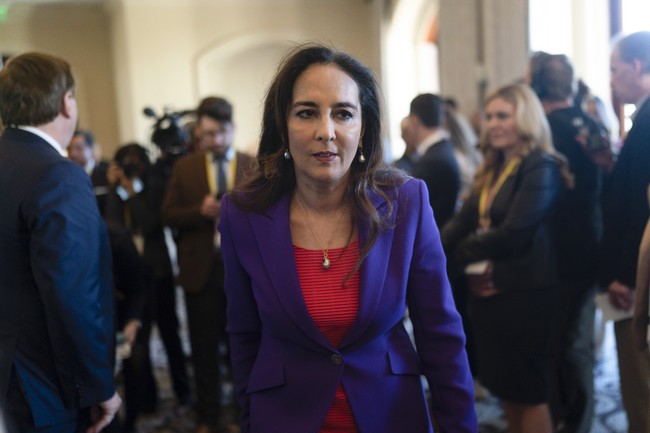
Today, the Civil Rights Division at the U.S. Department of Justice (DOJ), under Harmeet Dhillon, announced that it has launched an investigation into BCHD “to determine whether it engages in employment practices that discriminate against, or limit, segregate, or classify, employees because of their race, color, and national origin in violation of Title VII of the Civil Rights Act of 1964, as amended.”
According to Spotlight’s reporting, “Records show the agency paid outside consultants to conduct racial equity training and then advised BCHD to host separate ‘white caucus’ and ‘people of color caucus’ meetings. The practice – carried out inside Baltimore City government and funded with public dollars – has drawn sharp criticism from civil rights leaders, legal experts, and community members who say it risks deepening division and raises legal and ethical concerns.”
Reporters accessed invoices that reveal BCHD paid those consultants approximately $50,000 between 2022 and 2024 to conduct a workshop called “Undoing Racism.” The consultants represented a group called People’s Institute for Survival and Beyond (PISAB). It’s based in Louisiana.
Spotlight reported that “in one internal email, a Baltimore City Office of Equity & Civil Rights employee described the organization as ‘OG radical organizers,’” and that BCHD paid PISAB to “attend and provide feedback for its monthly ‘White Caucus Group,’ defined by the agency as a ‘group of white people who meet for the purpose of building analysis, awareness, stamina, and strategy to challenge systemic racism and internalized white supremacy.’”
DEI language is often a combination of grandiose self-importance and euphemistic code to avoid coming right out and saying what you’re thinking.
In explaining the need for separate groups, the consultants wrote in their description of workshop sessions: “These goals require some time and intentional spaces where white people can do the personal work of understanding our own complicity and systemic racism and build the skills necessary to challenge that complicity…White affinity groups allow us to examine our racial conditioning without relying on people of color for answers or subjecting them to our process.”
If the stated purpose is to undo workplace racism, the descriptor language seems to assume that white employees are the source of the racism in question, and that by isolating white employees for re-education those employees can come to terms with their own “complicity and systemic racism.”
Assistant Attorney General Harmeet K. Dhillon of the Justice Department’s Civil Rights Division took note and said, “Separating employees into training groups based on their race is discriminatory, illegal, and un-American. Such practices are divisive and foster a racially hostile work environment. Racial segregation of employees is deeply offensive to the American guarantee of equal rights under the law, and it will not be tolerated.”
BCHD reportedly paid PISAB $150 for each white caucus meeting its people attended and oversaw. These meetings were conducted through at least June 2025.
Thiru Vignarajah, former Maryland deputy attorney general, told Spotlight that hosting segregated meetings “raises serious legal questions.”
“I don’t think this is what Thurgood Marshall or the pioneers of the civil rights era had in mind for where we should be…The Supreme Court has always said that diversity is a valuable goal, whether it’s in higher education or law school education. Those are valuable goals. But the Supreme Court has also said how you get to those goals matters, and you can’t use methods like separating people into white rooms and people of color rooms,” he said.
When reporters tried to get answers directly from BCHD, they got crickets. Specifically, Spotlight reporters wanted comment from the health department on two key questions:
- “Why did you decide to segregate into separate groups for white people and people of color for discussions about racial equity?
- Are these meetings and training ongoing?”
BHCD did not provide comment.
But PISAB did respond. Spotlight reported that a spokeswoman said, “Affinity spaces, or employee resource groups as they are called in the corporate world, have been shown to increase employee engagement and retention. Research on affinity groups demonstrates that members feel more supported by colleagues after participating. These groups create opportunities to share ideas and offer feedback in smaller spaces, which then improves the quality of dialogue and problem solving across the department.”
Imagine using that word salad as a defense, in reverse, of Jim Crow laws. When you look at the content of workshop materials, it may be difficult to determine how they help “members feel more supported by colleagues after participating.”
One handout was titled “The Iceberg of White Supremacy.” It listed “covert” examples of “white supremacy” as “colorblindness,” “claiming reverse racism,” “anti-immigration policies” and the “celebration of Columbus Day.”
In other words, if you try not to see color in your coworker, if you notice instances of reverse racism, if you’re not on board with immigration as approved, and if you celebrate Columbus Day, you’re a problem.
Spotlight also found material titled, “‘How to Plan a White Caucus Agenda’ (which) states: ‘Working in multiracial groups is difficult not because the group is difficult but because white supremacy is a systemic sickness.’”
Am I reading this right? If I’m white, was I just told I’m a white supremacist, and because of that I suffer from “systemic sickness”?
The “experts” like to tell those of us in communications never to try to make a point on matters like this by suggesting hypothetic race reversal. But truly, imagine if you changed “white” to “black” in any of these materials, and then read the content out loud somewhere. In a city like Baltimore, you’d lose your job, maybe lose your bank account, and essentially get run out of town.
If I may, this all feels a lot like reverse racism.
Find out what you’re missing behind the members-only wall. It’s time for you to take advantage of the full catalogue of common sense thinking that comes with a PJ Media VIP membership. You’ll get access to content you didn’t even know you wanted, and you’ll be hooked. The good news is, PJ Media VIP memberships are on sale! Get 60% off of an annual VIP, VIP Gold, or VIP Platinum membership! Use promo code FIGHT to get 60% off a VIP membership!