

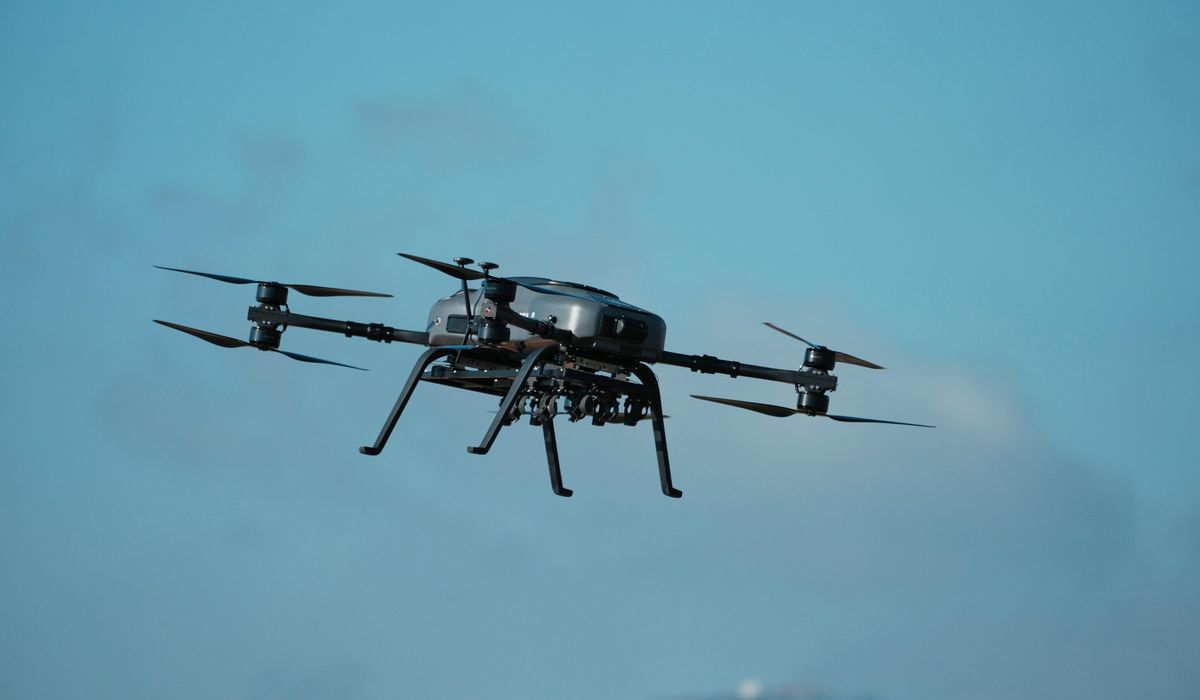
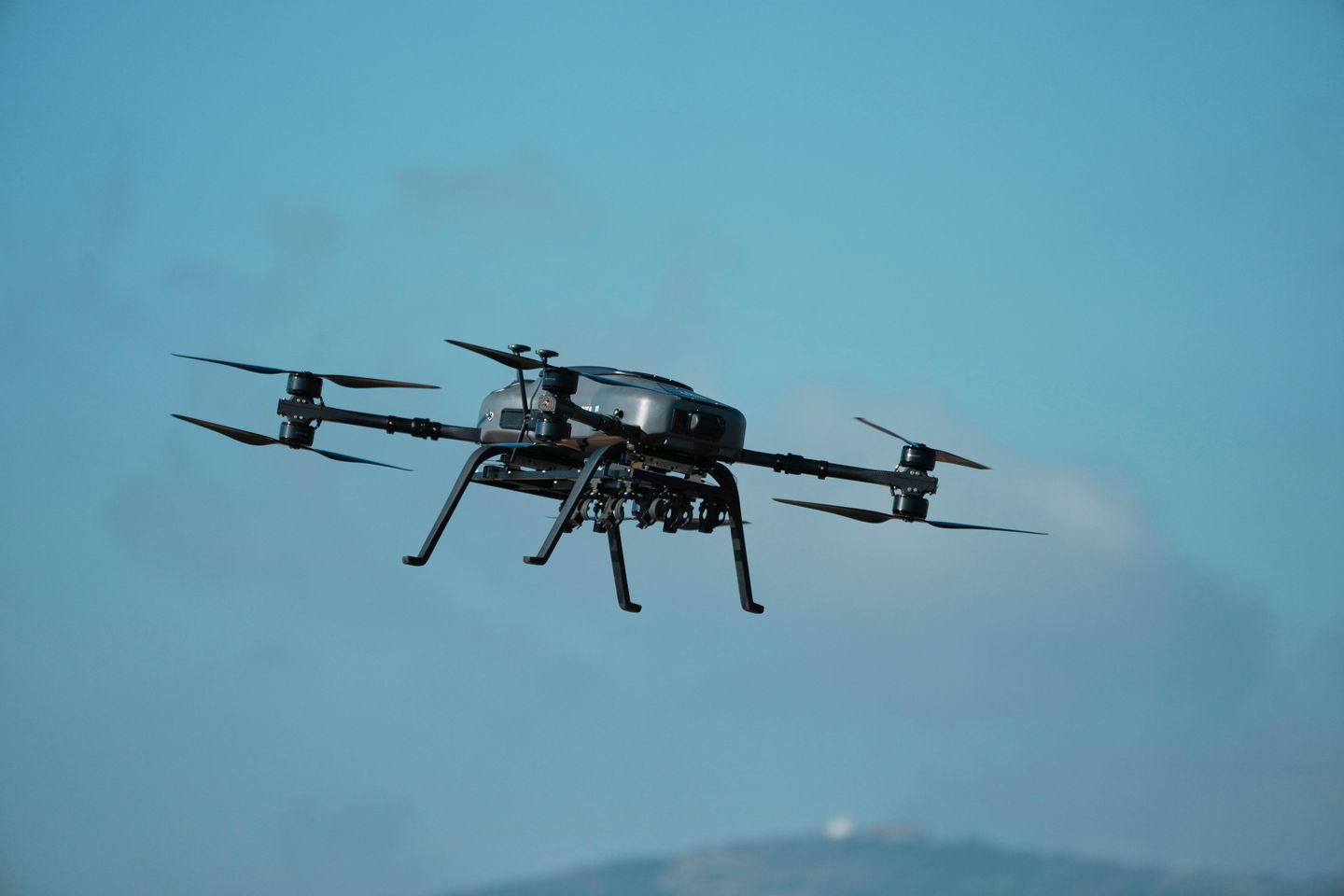
The Drone Dominance Initiative, a $1 billion plan to have small, expendable drones built domestically, will close its first request for solutions Friday afternoon, as companies compete for a shot at long-term defense contracts and a chance to be part of an order for 30,000 of the deadly battlefield devices the Pentagon is expected to place next month.
“We now find ourselves in a new era,” Defense Secretary Pete Hegseth in a video announcement in December. “An era of cheap, disposable battlefield drones. We cannot be left behind, we must invest in inexpensive unmanned platforms that have proved so effective.”
The new Drone Dominance website shows a countdown timer, ticking down by the minute until the request is closed. A timeline starting this month and continuing 18 months, is also on the website. The first round of evaluations in February, named “Gauntlet 1” by the military, will kick off the drone orders. The U.S. military “expects to order 30,000 drones with deliveries to be fulfilled by July 2026.”
“We will deliver tens of thousands of small drones to our force in 2026,” Mr. Hegseth said. “Hundreds of thousands of them by 2027.”
The current request from the U.S. Department of Defense says “drones are reshaping the character of war” and that the department is looking for small drones meant for “one-way attack.”
The funding for companies comes in the form of a “prototype” award that the government says “are intended to test production scale and operational use” of the designs selected.
The initiative’s first order of 30,000 drones isn’t envisioned as a batch from one company, but rather as a compilation of smaller orders based on how systems are ranked in testing. Top place will receive an order for only 2,500 drones, second place 2,400 and so on down the list.
The military is reserving an additional 6,600 drone orders as a “bonus.”
The cost won’t be bottom barrel for this first run though, with the drones being purchased for $5,000 each. Companies will have to focus on scale and delivery, as 40% of the total value they win will be paid for when the first half of their drones are delivered, the other 60% of funds coming once the order is complete in July.
Even with those challenges, experts in the field see this as an opportunity for small drones and first-person-view (FPV) style drones to find their way into the hands of service members quickly.
FPV drones have become a staple of the war in Ukraine and warfare tactics in the region have rapidly evolved to meet the new technology. Jamming, nets to physically block drones, and other mechanisms to defeat the small quad-copter style drones litter the battlefield.
But there is a challenge that isn’t a current restriction on the active battlefield in Europe. The U.S. military will require nearly every part, down to the smallest piece, to be manufactured domestically.
The Blue List, a collection of approved commercial products and drones maintained by the Defense Contract Management Agency and developed by the Defense Innovation Unit, will be a critical reference to companies wanting to participate. It was developed in 2020 after Congress prohibited drones with any components, controllers, software, radios, or network pieces manufactured in China, Russia, Iran or North Korea.
The Drone Dominance Initiative will be a way for new companies to have their drones added to the approved list, opening up their commercial product to defense purchases.
A main goal of the initiative is “to buy commercial technologies for novel applications supporting defense purposes,” pushing the risk of development, manufacturing, scale and commercial viability back on the companies that want to participate.
It’s a big risk for companies. Balancing against that goal will be the department’s other aim of keeping these drones “cheap” and “disposable.”